| |
| Wednesday, 09 September 2026 |
| Art Deco Jewellery: The Glamour Revolution |
| Laurie Wickwire |
 |
A graduate of Gemological Institute of America, the International Gemological Institute and DeBeers Institute of Diamonds, Laurie Wickwire is both a certified diamond grader and certified pearl grader. She is the luxury gems specialist for the shopping channel QVC and has also appeared on BBC and ITV programmes. Laurie created the Historical Jewellery Range for Buckingham Palace & Windsor Castle, crafted a jewellery item for the Duchess cof Cambridge (worn on cover of Hello Magazine) and was commissioned in 2006 by Prince Charles to create the 30th Anniversary Item for the Prince's Trust. The Art Deco movement was a time when fashion and jewellery were the calling cards of the time. At the start of the ‘roaring ‘20’s, people were exhausted by the ravages of the First World War, there was an appetite for change and Art Deco was the popular design movement that answered that call. The talk Art Deco Jewellery: The Glamour Revolution explores this design movement through the jewellery, fashion, architecture and automobiles of that era. |
|
| Wednesday, 10 June 2026 |
| Antony Gormley: The Body As A Place |
| Anna Moszynska |
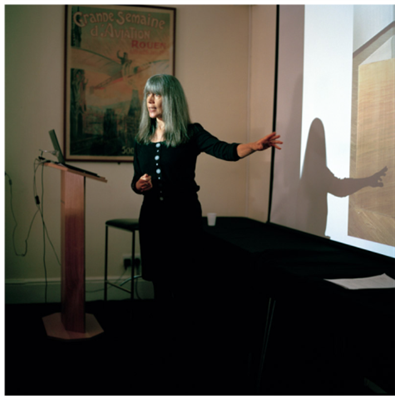 |
Anna Moszynska is a London-based lecturer and writer specialising in contemporary art. She oversaw the development of the subject as the first Master’s Degree at Sotheby’s Institute, and has also taught at other institutions in London including The City Lit, the Royal Academy and Tate. Her books include Abstract Art (1990, enlarged ed. 2020) and Sculpture Now (2013), and two books on the drawings of Antony Gormley, whose work she has curated at MACRO, the Museum of Contemporary Art in Rome. Antony Gormley is probably best well-known for his iconic ‘Angel of the North’, imposingly situated beside the A1 near Gateshead. However, this 20-metre high landmark sculpture is just one of a host of memorable pieces - including, of course, `Another Place` on Crosby beach - that he has created during the course of a prolific career that already spans over four decades. Having known Gormley since he was a student at the Slade and written two books on the artist’s drawings, Anna will review the development of this major British sculptor from a unique perspective, examining his continuous fascination with the body as a place – both of experience and of interaction with its surroundings. |
|
| Wednesday, 13 May 2026 |
| Textile Revolution: Post War Female Designers |
| Ashley Gray |
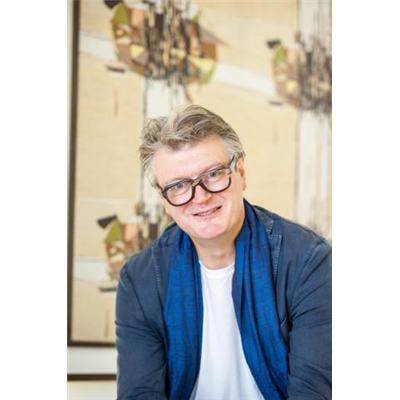 |
Ashley Gray is a leading specialist and curator in the key art discipline of Modern Textiles and their history, and is regularly invited to lecture on the subject both in the UK and the US. As a curator and archivist, he works with institutions and foundations on conservation and exhibition projects. Most recently he curated Styled by Design at Cromwell Place in London, an exhibition that celebrates the innovation of Modernist textile design. He co-curated Material Textile: Modern British Female Designers and Material Textile: Creativity, History & Process, both with Messums Gallery, Common Thread at New Art Centre and From Bauhaus to our House also at Cromwell Place. He is currently researching the role David Whitehead Ltd in Lancashire played in commissioning innovative modern designs in the Festival of Britain era. An exhibition is planned for 2027. The history of Britain is intricately woven with the history of textiles. Following World War II there was a desire for change, colour, and inspiration in the home. This energy and innovation was led by female textile designers destined to revolutionise design internationally from the 1950s to the 1970s. This lecture celebrates their vision, their influences and their determination that successfully brought modern and contemporary art into the home through their designs and thereby democratised modern art for the first time by making it literally a part of the furniture. |
|
| Wednesday, 08 April 2026 |
| Stanley Spencer: Cookham, A Village In Heaven |
| Amy Lim |
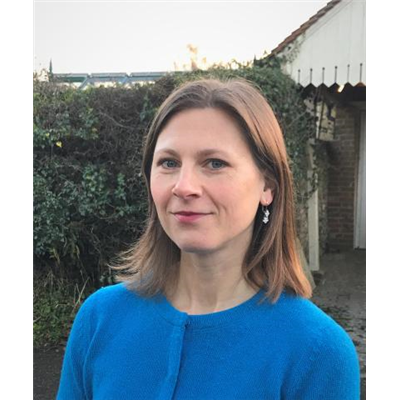 |
Dr Amy Lim is an art historian and curator, specialising in British fine and decorative arts from the seventeenth to twentieth centuries. She is curator of the Stanley Spencer Gallery, Cookham, and a tutor at the Oxford University Department for Continuing Education. Amy has degrees in History and Literature & Arts from the Universities of Oxford and Cambridge. She runs an online art dealership, and has published articles and essays on a variety of art-related topics. Few artists are as rooted in a place as Stanley Spencer and his beloved home village of Cookham. This Thames-side village was not only his birthplace, his home for most of his life, and even his nickname, but it dominated his imagination and was the inspiration and location for many of his greatest paintings. This lecture will look at Cookham’s place in Spencer’s art, and how it was central to his unique vision of English domestic and spiritual life. |
|
| Wednesday, 11 March 2026 |
| Jane Austen and her Mysterious Final Illness |
| Alan Silman |
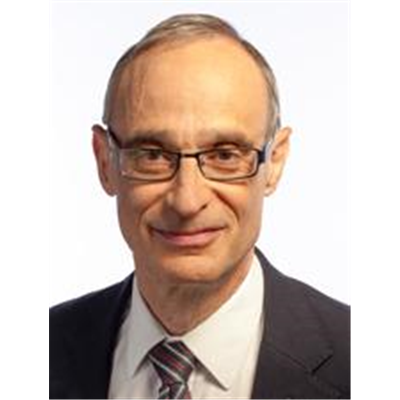 |
Currently Professor of Medicine at Oxford University and Senior Research Fellow at Green Templeton College, Alan Silman is one of the most distinguished academics in his field. An epidemiologist with a particular interest in diseases of bones, muscles and joints, he has authored over 700 research publications and a number of textbooks. He is amongst the top 100 published scientists across all disciplines in UK universities, and has been an advisor on several government committees. Jane Austen came from a large, relatively affluent family and is one of the most loved of British authors, though not recognised in her own lifetime. She was a prolific letter writer and from these letters, medical historians have attempted to piece together nature of her mysterious last illness. In this lecture, Professor Silman explores her biography and considers what the letters tell us about her declining health and how his conclusion is informed by information from a recent First Lady in the White House! |
|
| Wednesday, 11 February 2026 |
| A Life Among Plants |
| Timothy Walker |
 |
Timothy Walker ganed his first degree in Botany at Oxford University, and In 1985 was awarded a Master of Horticulture by the Royal Horticultural Society of London. From 1988 to 2014 he was director at the Oxford Botanic Garden, which under his leadership In 2009 was awarded a Queen’s Anniversary Prize for providing imaginative educational programmes for adults, students, children, and the general public. In 2010 Timothy was elected as a Fellow of the Linnaean Society of London and In that same year presented a 3-part series of films on the history of botany on BBC4. Since 2014 he has been a tutor in Plant Biology at Somerville College, Oxford. Of this lecture, Timothy writes: "After more than half a century of growing and studying plants, it has become clear to me that gardens are places where people meet plants for myriad reasons including art, science, and fun. However, there is another dimension to our relationship with plants which is more personal and spiritual. This talk looks at how plants have impacted on my life and the lives of many other people." |
|
| Wednesday, 14 January 2026 |
| Painting in Northern Britain in the 20th Century |
| Ed Williams |
 |
Ed Williams, an Oxford educated Art Historian, is passionate about sharing his love of the History of Art to a range of audiences. He works at TATE Liverpool, delivering tours and talks of the collection and special exhibitions and is also an official Green Badge Tour Guide for North Wales. In addition to leading tours Ed teaches the History of Art at the University of Liverpool, where he specialises in teaching adult learners at the Department of Continuing Education. He is a member of the International Association of Art Critics and his work has been published in several journals and online publications.
L.S. Lowry’s works are perhaps the most immediately familiar of any ‘provincial’ British painter, but his enduring popularity has perhaps cast a shadow over those contemporaries active in Northern Britain during the first half of the 20th Century. This lecture - subtitled "There`s More to Life than Lowry" - considers those other artists and painters who sought to embrace the new visual language of modernism, but whose approach recognised and embraced the urban and natural landscapes of Northern Britain. |
|
| Wednesday, 12 November 2025 |
| Going to the Ball |
| Jacqueline Hyman |
 |
Jacqueline Hyman gained textile conservation experience with Museums' Service before establishing her own freelance studio in 1982. She is an accredited conservator and restorer, listed in The Institute of Conservation`s Register. The list of organisations she has delivered lectures and study days to includes The Arts Society, The Embroiderers' Guild, The Lace Guild, Antique Collectors' clubs and others.Jacquline has also appeared on Channel 4, BBC 2 and the Discovery Channel.
During the Victorian Era, magnificent fancy dress balls became one of the grandest and most fashionable ways for a society hostess to make her mark. These balls were reported in newspapers and magazines in great detail -who was there, what they were wearing, who designed their gown and the historical figure they represented. Today’s social media and influencers would literally have had a ball. No expense was spared and these balls became the elite event of the year. |
|
| Wednesday, 08 October 2025 |
| How to Look Slowly: Impressionism |
| Joanne Rhymer |
 |
Since completing an MA at University College London in the History of Art, Joanne Rhymer has been employed in various roles at the National Gallery including Adult Learning Officer and the Head of Adult Learning Programmes. She has also worked in prestigious learning departments in London galleries and museums including Tate, the Hayward Gallery and the National Portrait Gallery. Currently a Panel Tutor for the Institute of Continuing Education at the University of Cambridge, Jo also teaches for the Wallace Collection and the V&A. Looking slowly at an Impressionist painting might at first seem counterintuitive, since one of the concepts associated with Impressionism is that the artist captures quickly in paint a fleeting moment. However, the Impressionists’ works were often the result of careful observation and planning and their paintings invite us to dwell on and enjoy the evocation of a transitory effect. Looking slowly at an Impressionist painting is to engage with the idea of seeing a moment which in lived existence might pass unnoticed, but one which the artist was keen to represent to produce visual pleasure. In order to appreciate the artist’s work, we need to look slowly, and this presentation looks at a small selection of works in order to experience Impressionism with particular attention to the innovations of the style and the development of visual analysis skills. |
|
| Wednesday, 10 September 2025 |
| The Extraordinary Life and Art of Salvador Dali |
| Bill Powell |
 |
Bill Powell`s working career was in finance, beginning as an accountant with BT and ultimately serving as the UK Chairman of the Consumer Credit Trade Association. He took early retirement and embarked on a completely different career as a tour manager, escorting groups of people to various destinations around the world. During this time he was able indulge his love of Modern Art, visiting galleries across the globe. He started lecturing on cruise ships in 2013 and in due course became an accredited Arts Society lecturer. Considered by many as the greatest ever exponent of the Surrealist movement, Dali's expansive artistic repertoire included film, sculpture, and photography. To the dismay of many of his admirers, his eccentricity often drew more attention than his artistic endeavours. This lecture will look at his life and his works and assess his place in 20th century art. |
|
| Wednesday, 11 June 2025 |
| The Queen of Instruments: The Lute within Old Master Paintings |
| Adam Busiakiewicz |
 |
Adam Busiakiewicz is an Art Historian, Lecturer and Lutenist. After completing his Bachelor’s Degree in History at University College London he held the position of Head of Historical Interpretation at Warwick Castle. He left the castle in 2013 to pursue a Master’s Degree in Fine and Decorative Art at the Sotheby’s Institute of Art. He completed his doctorate in the History of Art at the University of Warwick and became a cataloguer in the Old Master Paintings Department at Sotheby's where he remains a Consultant. He has lectured, run courses and performed at the National Gallery, the Wallace Collection, the Royal Collection, the Victoria and Albert Museum and the Sotheby’s Institute of Art, and alongside his publications and scholarly articles, he is the co-editor of arthistorynews.com, one of the internet’s most popular art history blogs. The lute holds a special place in the history of art: painters of the Italian Renaissance depicted golden-haired angels plucking its delicate strings, evoking celestial harmony; in the sixteenth century, during the rise of humanism, the lute was a becoming pastime of educated courtiers, as depicted by the likes of Holbein and Titian; throughout the seventeenth century, the instrument continued to play a key role in emphasising the intimate, debauched and transient pleasures of interior scenes by Jan Steen and portraits by Frans Hals. This lecture looks at the lute, and other musical instruments, as devices to express various aspects of the human character throughout the ages. |
|
| Wednesday, 14 May 2025 |
| Romance and Rocks: Welsh Landscape Art |
| Ed Williams |
 |
Ed Williams, an Oxford educated Art Historian, is passionate about sharing his love of the History of Art to a range of audiences. He works at TATE Liverpool, delivering tours and talks of the collection and special exhibitions and is also an official Green Badge Tour Guide for North Wales. In addition to leading tours Ed teaches the History of Art at the University of Liverpool, where he specialises in teaching adult learners at the Department of Continuing Education. He is a member of the International Association of Art Critics and his work has been published in several journals and online publications. Welsh Art’ and Wales as an artistic destination are perhaps not subjects which have been given serious attention in the past. Welsh artists are often considered to be, at best, minor figures within the wider canon of British Art. Similarly depictions of Wales are often little appreciated when considered alongside more ‘exotic’ locations. This lecture seeks to enlighten audiences as to the key role Welsh artists have played, commencing with the father of British landscape art, Richard Wilson. We will consider the enduring influence of the Welsh landscape in the emerging Romantic period, as captured by JMW Turner, through the later 19th Century with the establishment of the Betws y Coed artists’ colony and then consider the artists of the 20th century who offered a very different interpretation to the vision of the ‘Land of my Fathers’. |
|
| Wednesday, 09 April 2025 |
| Pioneering Women Photographers |
| Suzanne Fagence Cooper |
 |
Art historian Dr Suzanne Fagence Cooper was a curator and Research Fellow at the V&A Museum, and is currently Honorary Visiting Fellow at the University of York. She has curated a major exhibition on John Ruskin and J.M.W.Turner, and she is planning a new exhibition project on William Morris and his family for 2025. Suzanne is the author of several books on the Pre-Raphaelites, a trustee of the Burne-Jones catalogue raisonné and has worked as a consultant for TV and film projects, including 'The Invisible Woman' with Ralph Fiennes. Her latest book is 'How We Might Live: At Home with Jane and William Morris'. From the earliest days of photography, women claimed this new art for their own. This lecture offers a new vision of the Victorians, seen through the lenses of pioneering women. It includes the intimate fantasies of Clementina, Lady Hawarden; the soft-focus story-telling and images of Empire made by Julia Margaret Cameron; and radical portraits captured by the Suffrage campaigner Olive Edis. |
|
| Wednesday, 12 March 2025 |
| The Art of Kashmir |
| Zara Fleming |
 |
Zara Fleming is a lecturer, art consultant and exhibition curator specialising in the art and culture of Tibet, the Himalayan areas and Mongolia. Initially based at the V&A, she has also worked with the Central Asian Department of Bonn University, the Orient Foundation, the Royal Academy, Tibet House, the National Museums and Galleries on Merseyside and Asia House. A guest lecturer and tour guide on numerous trips to the Himalayas, Zara edited Masterpieces of Mongolian Art: Vol 1 and has published many articles in the field of Buddhist art and culture. This lecture introduces the astonishing diversity of arts and crafts produced in the tiny area of Kashmir, influenced by Buddhist, Hindu and Islamic cultures. It explores Buddhist sculptures, Hindu temples, great Islamic gardens, paintings, calligraphy, Moghul carpets and Kashmir shawls. Despite its troubled history, Kashmir has fostered a unique environment of artistic diversity and religious co-existence. |
|
| Wednesday, 12 February 2025 |
| Meet The Glasgow Girls |
| Julia Marwood |
 |
Julia Marwood has loved looking at art since discovering the work of Gustav Klimt while teaching English in Austria as part of her German degree course at the University of Durham. She spent the first part of her career teaching German, then did a Master’s in Teaching English at the University of Manchester, and went on to teach international students in the city. She became a tour guide at Manchester Art Gallery in 2015 and after leaving language teaching in 2018 she has loved spending all her time sharing her passion for art as a speaker to many different groups. This lecture will tell the story of the Glasgow Girls and introduce many of the most important characters, including textile artists Jessie Newbery and Ann Macbeth, illustrator Jessie M King, fine artists Stansmore Dean, Bessie MacNicol and Norah Neilson Gray, and the sets of talented sisters working together in the field of design and applied art - the Waltons, the Gilmours and, of course, the remarkable Macdonalds - Frances and Margaret, the latter known for so much of the twentieth century as just Mrs Mackintosh. Now their outstanding achievements are being increasingly researched and celebrated, as they so rightly deserve. |
|
| Wednesday, 08 January 2025 |
| Greek Vases |
| Ben Cartlidge |
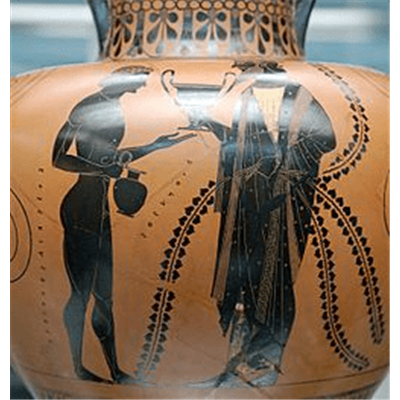 |
2.00 p.m. Dr Ben Cartlidge took his first degree in Classics at Trinity College, Oxford, went to Cologne to add an MA, and returned to Oxford to acquire his doctorate. Since then his academic career has seen him teaching both at Oxford and, currently, at Liverpool University, and he has published papers on various aspects of Classical studies. Pottery is one of most durable of human artefacts, and substantial collections of Greek vases can be found in many a museum. Often exquisitely decorated, these objects give us a wealth of information about the life and beliefs of the ancient Greeks, as well as being works of art in their own right. |
|
| Wednesday, 13 November 2024 |
| A Dickens of a Christmas |
| Bertie Pearce |
 |
2.00p.m. Bertie Pearce has a BA (Hons) in Drama from Manchester University, and a Diploma Internationale from the École Internationale du Théatre, Jacques Lecoq. He is a member of the Inner Magic Circle with Gold Star, the highest degree possible within the society. His past experience includes lecturing and performing on cruise ships, and to U3A, historical societies, festivals, schools and colleges. In addition, he has toured the world with a magic cabaret show and a one man show entitled All Aboard and is the author of several articles for newspapers and magazines on entertainment and theatre. Charles Dickens has often been proclaimed as “The Man Who Invented Christmas” and indeed on hearing that Dickens had died, a cockney barrow-girl said: “Dickens dead? Then will Father Christmas die too?” Dickens revived the Christmas traditions with his warm portrayal of Christmas in the domestic setting; with plum pudding, piping hot turkey, games, dancing and family cheer by the hearth. Although he celebrated Christmas in numerous works it is his enduring masterpiece, ‘A Christmas Carol’ published on 19th December 1843 which immortalises the spirit of Christmas Cheer. In this lecture - `A Dickens of a Chruistmas and God Bless Us Every One` - Bertie Pearce reveals a Dickensian Christmas with readings, biographical details and conjuring tricks. |
|
| Wednesday, 09 October 2024 |
| Fashionable Folds: The Fan as the Ultimate Fashion Accessory |
| Scott Sciavone |
 |
2.00 p.m. Scott Schiavone is a fashion historian and curator, and an alumnus of both University of Glasgow and London College of Fashion having graduated from the MA (Hons) History of Art and MA Fashion Curation in 2004 and 2010 respectively. Scott has worked with fashion and textile collections across the UK including Glasgow Museums, National Museums Scotland and The Fan Museum in Greenwich. He recently relocated to Preston to join the Curatorial team leading the HarrisYourPlace project at The Harris Museum & Art Gallery, a £10.4 million Heritage Lottery Funded project that will transform The Harris into a community lead centre for arts and culture. In 2020, Scott launched his YouTube channel Fashion &… which now has over 4,500 subscribers. Fans have been used for millennia, principally for cooling but also for religious and ceremonial purposes. In Europe, they later developed into a ubiquitous accessory for the fashionable elite. Fans were produced to commemorate births, marriages and deaths, were decorated with scenes of love and pastoral scenes of idyllic aristocratic life. They were also used as a conduit for communication through their handling and the subject matter painted upon their storied folds. But most of all, fans were a tangible marker of taste, status and wealth, and, when worn alongside gowns, jewels and tiaras, were akin to a sceptre with all its majestic connotations. This lecture explores not only the rise of the folding fan in Europe as fashion’s most statement-worthy accessory but also the artistry and craftsmanship of fan making in relation to the changing fashionable trends in dress throughout Europe from the 16th to the 20th century. |
|
| Wednesday, 11 September 2024 |
| David Hockney; A Certain Generosity of Spirit |
| Michael Howard |
 |
2.00 p.m. Michael Howard, President of The Arts Society Bolton and Fellow of the Royal Society of Arts, is a practising artist, a painter, sculptor, printmaker and ceramicist. He has exhibited at the Royal Academy and his work is represented in the Manchester Art Gallery and in many private collections here and abroad. He teaches at the Manchester School of Art and has published widely on European Art of the 19th and 20th centuries. This lecture will celebrate the inspirational work of one of Britain’s best known artists whose work is instantly recognisable and speaks directly to us of the joys and challenges of being alive. We will share the journey of his life from Bradford to London; to New York and Los Angeles and back to Yorkshire and then his return to LA. His art is a sounding board of his vivid and colourful life and a reminder of the joys of looking, making . . . and living.` |
|
| Wednesday, 12 June 2024 |
| Music in Art |
| Sophie Matthews |
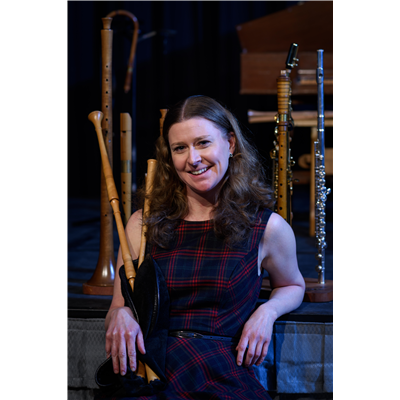 |
2.00 p.m. Sophie Matthews a musician well-known for her prowess on the English border bagpipes and has become one of the foremost players of the instrument in the UK. She also plays a variety of early woodwind instruments such as shawm, rauschpfeife, crumhorm and recorder. She’s also one of a handful of British players of the baroque musette, an 18th century French bagpipe similar to the Northumbrian smallpipes. She is self-taught on all instruments, which she also makes as well as plays. So many of our historical references for musical instruments can be found in works of art. Not only can these windows into the past show us what the instruments looked like but also the social context in which they would have been played. Music and different instruments also play a strong role within symbolism in art. In her talk, Sophie explores the instruments in selected works and then gives live demonstrations on replicas of the instruments depicted. |
|
| Wednesday, 08 May 2024 |
| Public Parks |
| Paul Rabbitts |
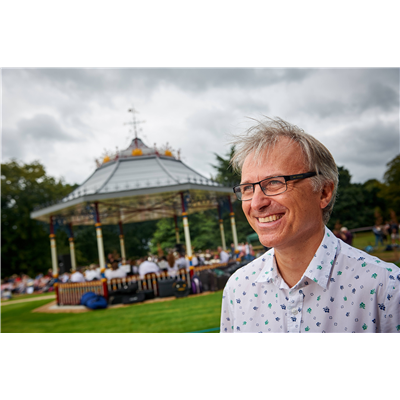 |
2.00 p.m. Paul Rabbitts obtained his first degrere from Sheffield University and followed that up with a Master`s at Edinburgh. A member of the Chartered Institute of Horticulture, Fellow of the Royal Historical Society, Fellow of the Royal Society of Arts, he is a historian, lecturer and prolific author with a passionate interest in public parks. Currently Parks and Open Spaces Manager for Norwich City Council, he has worked previously for several local authorities from Carlisle to Southend. Paul`s lecture - full title `A Concise History of our Great British Public Parks` - illustrates their origins from the great Royal Parks to the Pleasure Gardens of the eighteenth century, to their Victorian heyday. It discusses what makes a great park, it’s ‘parkitecture’ with examples of lodges, lakes, bandstands, fountains, lidos, palm houses and their wonderful floral displays, to their great decline in the sixties, seventies and eighties. However, the subsequent revival has led to a major shift in interest in our parks and once again we are very much in love with them. |
|
| Wednesday, 10 April 2024 |
| The Ealing Comedies.
Cinema from the Rubble: The Post-War Politics of Ealing Studios |
| Benedict Morrison |
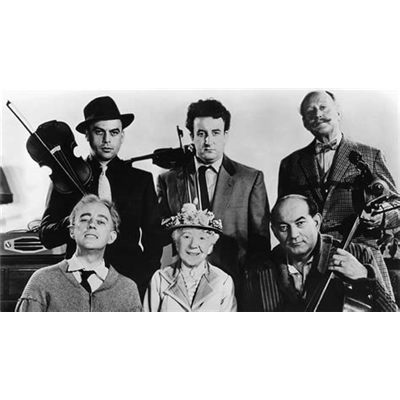 |
2.00 p.m. Benedict Morrison spent seven years studying at Oxford University and is now a lecturer in Literature and Film at the University of Exeter. He has recently published a book entitled Complicating Articulation in Art Cinema with Oxford University Press and is now producing works on various topics, including post-war British comedy films. Ealing Studios is often hailed as the most quintessentially English of all film studios. Run by Sir Michael Balcon for decades, the studio reached its zenith in 1949, its annus mirabilis, releasingPassport to Pimlico, Whisky Galore! and Kind Hearts and Coronets. Now most celebrated for these and the similarly magnificent comedies that followed, Ealing's films have a reputation for cosiness, whimsicality, and an ever-so gentle subversiveness. This talk revisits these films and reads them again, this time in the light of the post-war new waves that were beginning to emerge across Europe. Ealing films – like the masterpieces of Italian neo-realism – are films set amongst the ruins, documenting the lives of citizens in bombed cities. Viewed as comedies of rubble, they take on a far more serious set of meanings than their whimsical reputation suggests. Cinema from the Rubble: The Post-War Politics of Ealing Studios takes a new look at the famous comedies - Cinema from the Rubble |
|
| Wednesday, 13 March 2024 |
| Banksy - Fraud or Genius |
| Pepe Martinez |
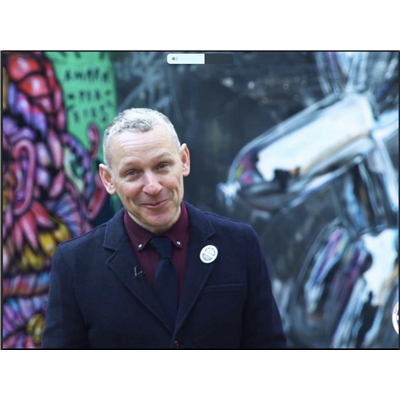 |
2.00 p.m. After a 15 year career as a tour manager that took him all over the world, Pepe Martinez qualified as a London blue badge tourist guide in 2011, graduating at the top of his class. Since qualifying he has specialised in the graffiti and street art of East London. Of all the street artists operating in the UK, Banksy is surely the most famous. Although the man remains mysterious, his work is well known and commands high prices whenever it comes on the market. The lecture will trace the story of Banksy’s humble beginnings as a tagger on the streets of Bristol in the 1980’s to one of the most recognisable names in the art world. We will examine the reasons behind his incredible rise, looking at some of his famous stunts and discuss what his influence has been on the art market today and look at what his legacy, if any, might be. |
|
| Wednesday, 14 February 2024 |
| Literature and Feminism |
| Anna Beer |
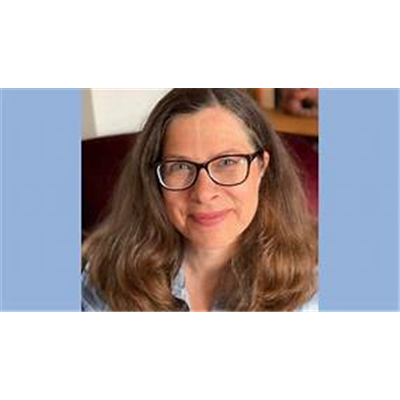 |
Anna Beer is an author and lecturer particularly known for her biographies. Philip Pullman described her biography of John Milton as "the best narrative I`ve read of the life of our greatest public poet". She was lecturer in Literature at the Department for Continuing Education at Oxford University between 2003 and 2010 and she remains a Fellow of Kellogg College. In 2022 Anna published her book "Eve Bites Back". Subtitled "An Alternative History of English Literature", this work illuminates the lives of women writers over several centuries. Her talk this afternoon willl bring some of these neglected figures out of the shadows, uncovering stories of dangerous liaisons and daring adventures, and celebrate their varied achievements. |
|
| Wednesday, 10 January 2024 |
| Caravaggio |
| Keith Bonser |
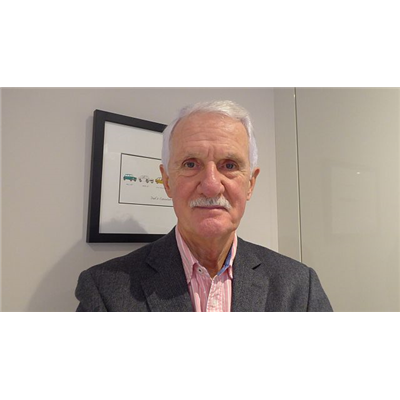 |
Keith Bonser was a teacher and senior manager in education for 38 years, until retirement gave him the opportunity to pursue a specific interest that had its origins in 1995, when a weekend break in Dublin introduced him to Caravaggio. Keith has travelled extensively throughout Europe to see his paintings in situ, tracing his life story from the town of Caravaggio to the cities of Milan, Rome, Naples, and the islands of Malta and Sicily. He subsequently wrote a book on these experiences, and says that since Caravaggio came into his life it has never been quite the same. Subtitled `Painter Extraordinaire, A Flawed Genius and ... A Murderer!`, this lecture combines an in-depth study of Caravaggio`s life and work with an account of how Keith Bonser became, as he describes himself, `a Caravaggist`, and demonstrates how art can inspire us all. |
|
| Wednesday, 08 November 2023 |
| Behind the Scenes Curating the Museum |
| Anna Bianco |
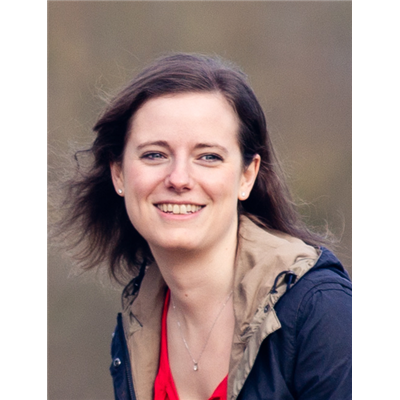 |
Anna Bianco is a freelance curator, writer, lecturer, tour guide and art historian, with a BA in History of Art and an MA in Curating from the Courtauld Institute of Art. She has curated exhibitions and displays at The Wallace Collection, The British Museum, The Embankment Galleries and The Southwark Art Collection. She was also Senior Curator for Faith at Auckland Castle in County Durham and has been a guest lecturer for Christies Education, Durham University, London College of Communication and the Open University. How long does it take to put together a major exhibition? Who decides what subjects will be explored and which objects will be included? How do you get an object from the Vatican to the British Museum? In this lecture members are offered a behind the scenes insight into the process and drama of putting together a ‘blockbuster’ exhibition. Drawing on her wide range of experiences Anna will share the trials, tribulations and joys of getting from the idea to the opening night. Behind the Scenes offers members a chance to discover a range of practicalities from packing crates, climate control and even insurance that open the door on to the inner workings of a museum. |
|
| Wednesday, 11 October 2023 |
| The Phantom of the Opera |
| John Snelson |
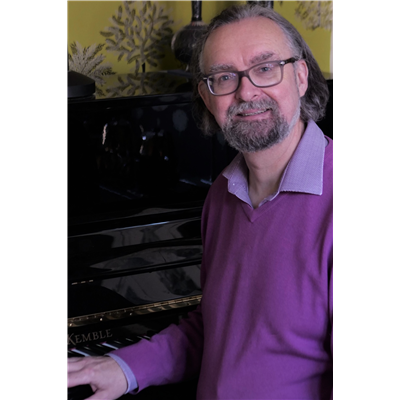 |
John Snelson is a leading expert in British musical theatre (the subject of his PhD), whose publications include Andrew Lloyd Webber (Yale University Press) and chapters in many authoritative reference works. He is especially known for exploring musicals – British and American – in the light of not just the music and the stage, but society and culture. John has given talks for, among others, the Royal Opera House, English National Opera, the Garsington and Glyndebourne festivals and for BBC radio. For 20 years he worked for the Royal Opera House. He currently lectures at Goldsmiths, University of London, and is completing a book on British musical theatre. Gaston Leroux scored a minor success in 1909–1910 with his potboiler novel The Phantom of the Opera. In the following century it grew to be a global phenomenon through a vast number of adaptations to stage and screen. How did the original novel come about, why has it proved so adaptable, and what gives it such a lasting grip on the popular imagination? With Andrew Lloyd Webber’s musical as just one of the many examples, this lecture unpacks a world of mystery, masks and music to discover romance in China, comedy in South America and high art in Europe. Discover why this modern myth continues to surprise and intrigue. |
|
| Wednesday, 13 September 2023 |
| The Golden Age of Fashion Illustration |
| Connie Gray |
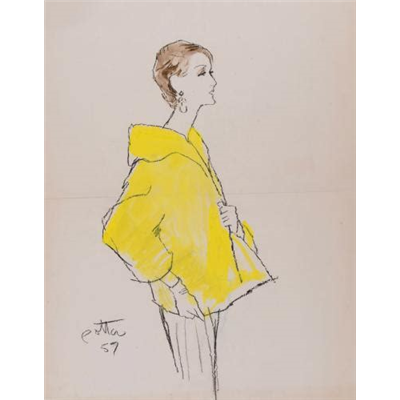 |
Connie Gray is a specialist in the history of 20th century fashion illustration and its powerful legacy with the most influential fashion publications and the great couture houses of Paris, London and New York. She is regularly invited to lecture both in the UK and the US and sits on advisory boards at The Courtauld Institute of Art, London and Special Collections at the Fashion Institute of Technology, New York. She has been invited to curate specialist exhibitions including most recently Legends Only at Claridge’s Hotel, London in 2022. Other specialist exhibitions have included Cunard’s Transatlantic Fashion Cruise on their flagship ship Queen Mary 2 to celebrate London and New York fashion weeks. Clothing and fashion have been depicted in art since the earliest civilisations yet as a recognised art form it was not until the late 19th century that fashion in art became a defined genre, recognised as an essential marketing tool in promoting fashion to a wider audience. Discover the magnificent art of Erté (1892-1990) and Georges Le Pape (1887-1971) and a generation of fashion illustrators who followed as they documented fashion from the glittering 1920s through to the democratisation of fashion in the 1950s, and why this period is known as the golden age of fashion illustration. |
|
| Wednesday, 12 July 2023 |
| Summer Special: The Poetry of Trees |
| Stephen Whittle |
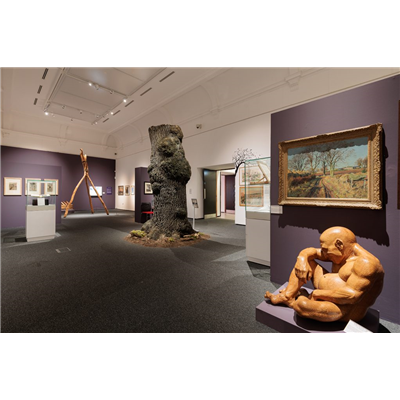 |
Stephen Whittle has been the Principal Manager of the Atkinson Museum and Gallery in Southport since 2013. At this afternoon`s Summer Special he will give members an insight into, and first hand account of, the exhibition `The Poetry of Trees` that ran at the Atkinson from July 2022 to March 2023. |
|
| Wednesday, 21 June 2023 |
| The Silent Moment of Johannes Vermeer.
Note the change of date to 3rd Wednesday because of Bath & Beyond... holiday |
| Tim Stimson |
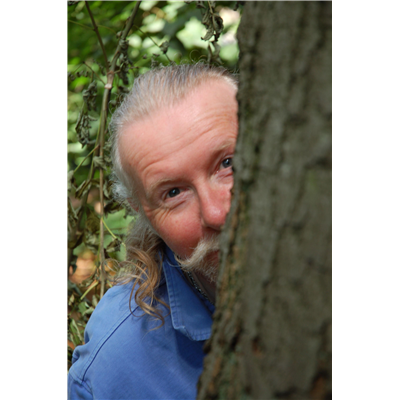 |
Tim Stimson was for a number of years a professional painter and ceramicist in Scotland and Wales, before returning to university to study literature and the history of art. For the last 20 years he has been a freelance cultural art historian, specialising in 17th and 19th century art and society. He now lectures for the universities of Cambridge, Nottingham and Hull, the WEA and the Art Fund and presents residential study courses in Britain and Europe. It was only in the 20th century that Johannes Vermeer (1632-1675) emerged from the group of renowned domestic life painters of Holland, to be ranked in reputation with Rembrandt, Hals and Steen. Why he is so highly regarded now is the central theme of this illustrated lecture which focuses on the balance, the harmony and the stillness of his pictures. There is a calm, meditative quality in them which soothes the modern viewer, just as they probably did over three hundred years ago. |
|
| Wednesday, 10 May 2023 |
| The Art of the Cartoonist |
| Harry Venning |
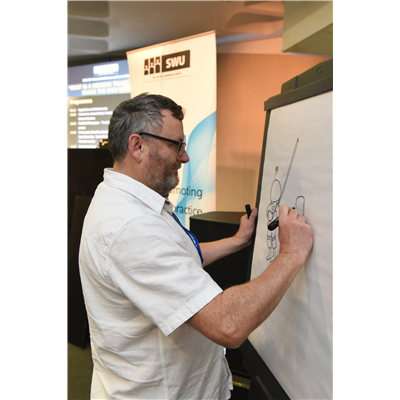 |
Please note that this lecture is a change from the previously advertised programme, as Susan-Kay Williams is indisposed. Harry Venning has been a professional cartoonist for thirty years, during which time he has provided cartoons for several high profile UK publications (The Guardian, Radio Times) as well as for countless more obscure titles (British Journal Of Wound Care). He was awarded UK Strip Cartoonist Of The Year for his Guardian strip Clare In The Community, which he adapted into a Radio 4 sitcom. In 'The Art Of The Cartoonist' Harry will be tracing the history of his profession with examples from early practitioners like Cruickshank and Hogarth, to more contemporary artists such as Giles and Schulz, bringing events right up to date with cartoons produced fresh on the page that day! Yes, Harry will be drawing live. Prepare to hear some tricks of his trade, learn where to put eyebrows for maximum effect and discover exactly what the eskimo brothers said in The Funniest Joke Ever (possibly). |
|
| Wednesday, 12 April 2023 |
| When We Were Little Lads: Morris and Burne-Jones |
| Kirsty Hartsiotis |
 |
Kirsty Hartsiotis has been the curator of the decorative and fine art at The Wilson Art Gallery and Museum, Cheltenham since 2008, and prior to that was the curator and manager of Swindon Museum and Art Gallery. At Cheltenham she looks after the Designated Arts and Crafts Movement collection, and she has curated many exhibitions relating to this movement. She is also a researcher with a particular interest in Arts and Crafts war memorials and church design. From the moment they bonded over bad accommodation at Oxford, William Morris and Edward (Ned) Burne-Jones were firm friends. They came from very different backgrounds – Morris had never wanted for anything, but Jones’ family was poor – but their shared love of medieval literature and art bound them together. Over the more than 40 years of their friendship they weathered personal storms, tragedies and political disagreements to create beautiful art and craft, collaborating on book design, stained glass and many other decorative projects. This talk charts the peaks and troughs of William and Ned’s long and fruitful friendship. |
|
| Wednesday, 08 March 2023 |
| Happy and Glorious |
| Barbara Askew |
 |
Barbara Askew is a lecturer, an historian and a distinguished Blue Badge guide - so distinguished, in fact, that she is the only guide accredited to conduct tours of the Albert Memorial. She has particular expertise in royalty and is an acknowledged expert on Windsor Castle. This lecture traces the history of the ceremonies associated with the coronation of British monarchs from Saxon times up to the present, including memorable mishaps that have occurred through the ages. It offers an insight into the different stages of the event and the significance of the regalia at its heart. Anyone who plans to watch the coronation of King Charles III will be able to do so with much more knowledge of what is happening after listening to Barbara`s informed account. |
|
| Wednesday, 08 February 2023 |
| The Rose Red City |
| Michael Clegg |
 |
Michael is a pilot-graduate of the RAF College and spent the first twenty years of his service career flying maritime patrol aircraft. Thereafter he undertook staff duties in national and international posts, his final position being in Naples as political adviser to senior NATO commanders on Greek-Turkish issues. While serving he completed a two-year part-time course in British Archaeology at Oxford University before transferring to the Open University where he studied Classical History and Renaissance Art leading to the awards of a Diploma in Classical Studies and a BA(Hons). He has planned and led many tours of ancient sites in mainland Italy, Sicily, Greece, Crete and Cyprus; carried out a survey of his ‘own’ villa in Italy; and excavated in Libya, Italy and the UK. He has also lectured extensively at home and overseas on ancient civilisations. ‘A rose red city half as old as time’ is the last line of an 1840 poem describing Petra. Now we all know Petra from these lines or perhaps from the film Indiana Jones and the Last Crusade or even Karl Pikington’s An Idiot Abroad. But in 1840 few westerners – and certainly not the poet - had seen the city. In fact it had been discovered only a few years previously, in 1812, by the Moslem scholar, Sheik Ibrahim Ibn Abdullah. But he was neither a Moslem, nor a sheik, nor was his name Ibrahim Ibn Abdullah. In this lecture we’ll uncover his story before studying the Nabataeans and their amazing desert city, learn how they made the transition from tent-dwelling nomads to rich and sophisticated urbanites, and study their fascinating not-quite-classical architecture. |
|
| Wednesday, 11 January 2023 |
| Introducing The Glasgow Boys |
| Julia Marwood |
 |
Julia Marwood has loved looking at art since discovering the work of Gustav Klimt while teaching English in Austria as part of her German degree course at the University of Durham. She spent the first part of her career teaching German, then did a Master’s in Teaching English at the University of Manchester, and went on to teach international students in the city. She became a tour guide at Manchester Art Gallery and knew at once that this was what she really wanted to do, spending every spare moment learning about art history. She eventually left language teaching in 2018 and since then has loved spending all her time sharing her passion for art as a speaker to many different groups. Disillusioned with the stuffiness and sentimentality of academic painting, a group of radical young painters burst onto the Glasgow art scene in the early 1880s and set in motion the stirrings of modernism in Scottish painting. Working out of doors in Scotland and France, they painted contemporary rural subjects strongly influenced by Dutch and French realism, especially the Naturalist paintings of Jules Bastien-Lepage and the tonal painting of the American artist James McNeill Whistler. This lecture introduces the characters and their works, and shows how they set the scene for what was still to come – especially the explosion of talent centred on the Glasgow School of Art under Francis Newbery, and the Scottish Colourists. |
|
| Wednesday, 09 November 2022 |
| Gaudi |
| Hugh Ellwood |
 |
Hugh Ellwood is an architect who graduated from Manchester University before becoming a partner with Building Design Partnership, the largest multi-discipline design organisation in the UK. He has also lectured both in an academic setting at the University of Central Lancashire and to various societies like ours. His topic is the Catalan architect Antonio Gaudi, probably best known for his work on the La Sagrada Familia cathedral in Barcelona and perhaps the most distinctive architect of his day. |
|
| Wednesday, 12 October 2022 |
| "We Are Amused!" |
| Bertie Pearce |
 |
Bertie Pearce has a BA (Hons) in Drama from Manchester University, and a Diploma Internationale from the École Internationale du Théatre, Jacques Lecoq. He is a member of the Inner Magic Circle with Gold Star, the highest degree possible within the society. His past experience includes lecturing and performing on cruise ships, and to U3A, historical societies, festivals, schools and colleges. In addition, he has toured the world with a magic cabaret show and a one man show entitled All Aboard and is the author of several articles for newspapers and magazines on entertainment and theatre. Even though ‘work’ was the bedrock of Victorian progress and improvement, Queen Victoria’s reign saw the greatest upsurge in leisure pursuits ever witnessed. People earned more money and worked shorter hours than ever before and, with the birth of the railways and a desire to be health conscious, it was a golden age for the art of entertaining oneself and being an amateur in the true sense of the word. This talk, described as `a panorama of Victorian leisure from the parlour to the seaside via the nursery`, celebrates a pre-television age when the ability to amuse and entertain was paramount. |
|
| Wednesday, 14 September 2022 |
| The Awkward Bodies |
| Kate Aspinall |
 |
Dr Kate Aspinall is an independent historian, writer, and artist. Based in London, she focuses her art historical work on British visual culture in the 20th century. She teaches occasionally for the Courtauld and Yale in London and has spoken at a range of galleries and public institutions, including Tate, the Towner and Pallant House. In addition to her art practice, which recently won a grant from the European Commission, she was a long-term consultant for the Roy Lichtenstein Foundation, and until recently she served as a Trustee of the Association for Art History, representing freelance and independent art historians. She has degrees from the University of St Andrews, the Courtauld Institute and the University of East Anglia. The pale flesh of Lucian Freud’s women. The red stars and barbs of William Coldstream’s nudes. The viscerally disturbing figures of Francis Bacon. This hour-long talk, subtitled `A Defence of British Modernism`, explores the special talent of British painters in the twentieth century for representing the human form in a particularly expressive manner. As disturbing as it is sometimes cathartic, the changing attitudes to depicting the human body reflected artists’ changing relationship to society and and to the events of the long and troubled twentieth century. |
|
| Wednesday, 13 July 2022 |
| Summer Special |
| Toni Bate |
 |
Toni Bate is a graduate of the Mabel Fletcher College, where she studied Theatre Wardrobe and Costume Construction, and began her teaching career at the University of Huddersfield, having previously obtained her Master`s degree there. She joined LIPA in 2017, and since 2020 she has been leading their Costume Making MA course. She also continues to research in the field of historical performance costume. Toni`s expertise is practical as well as academic. Throughout her career she has worked as a costume maker, tailor and wardrobe supervisor for theatre, film and TV. Her talk at our Summer Special will offer the opportunity to learn about the importance and significance of costume and costume design, including a chance to examine examples of costume at first hand – and possibly even to try some on! As always at the Summer Special, tea will be provided, and the cost for the afternoon will be £16. Members are encouraged to bring guests along if they wish. |
|
| Wednesday, 08 June 2022 |
| Potty About Commodes |
| Janusz Karczewski-Slowokoski |
 |
MR JANUSZ KARCZEWSKI-SLOWIKOWSKI Janusz Karczewski-Slowokowski is a freelance lecturer and researcher in English furniture history and also an antique dealer who was formerly a university Registrar in Manchester. His illustrated talk explores both the etymology of the word `commode` as well as the development of this elegant piece of furniture, contrasting the styles developed in France and England. |
|
| Wednesday, 11 May 2022 |
| Curves, Colours and Cool |
| Mark Hill |
 |
Mark Hill studied History of Art & Architecture (BA Hons), and began his career as a porter and Junior Cataloguer at Bonhams, before moving to Sotheby's where he was a Specialist in the Collectors' Department. He was co-author of the internationally published Collectables Price Guide from 2002-17, founded his own publishing company in 2005 and has since published over 12 books on specialist subjects in 20th century design and decorative arts. A Miscellaneous expert on the Antiques Roadshow since 2007, he has also co-presented three primetime factual TV series on antiques and collecting for BBC2. Mark, who has lectured across the world, including at the V&A in London, and contributed to many newspapers, magazines, radio and TV programmes, is a Freeman of the Worshipful Company of Arts Scholars and a Freeman of the City of London. This lecture is sub-titled `An Introductio to Mid-Century Modern`. The antiques market has changed dramatically and now pieces that were made during the 1970s can fetch many times more than a piece made in the 1770s. Why has the teak sideboard you threw out become so desirable? Who is this Eames guy? Drawing a blank with Timo Sarpaneva? Who’s buying what and what are they doing with it? This practical and inspirational lecture looks at furniture, ceramics, glass, lighting and metalware, identifies key designs and designers, and the examines the revolutionary design movements they began. |
|
| Wednesday, 13 April 2022 |
| Blenheim Palace - the Agony and the Ecstasy |
| Anthony Russell |
 |
As a cultural historian, writer and artist Anthony Russell has travelled much of the world. He spent six years as a consultant for the design firm Luke Hughes advising on the furniture needs of prestigious buildings throughout Britain, including museums, palaces, and cathedrals. At the British Museum, where for many years he ran outreach events and hosted visiting lecturers, he has been described as "Hugh Grant meets the Dalai Lama.” Committed to the 'search for civilisation' and as an advocate of nonviolence, he is the founder of The Chandos Foundation, supporting causes that promote understanding and cooperation, serves on the committee for Uniting for Peace and is a contributor to the All-Party Parliamentary Group on Democracy in Burma. He was also Founder of the Brockley Festival of Ideas and a Founding Advocate of CIVIL-ISATION. He is currently undertaking research for a new book on civilisation; what it is, whether we have it & how you get it. Possibly the most admired historic English building outside London, Blenheim Palace is an uncompromising World Heritage monument to English military ambition and one family's self importance. The story of its construction is a fascinating catalogue of excess and outrage, while the result is both monstrous and utterly sublime. But it is the effect that its perceived spirit has had on consecutive generations of Marlboroughs that is most revealing. It is also of course from within this 'cauldron' that a Churchill was born, recently voted the ‘The Greatest Briton of All Time’. This lecture explores these themes and the characters involved, marvelling at the genius of Vanbrugh and considering the real impact the palace has left on the nation. |
|
| Wednesday, 09 March 2022 |
| The Book As Art |
| Dominic Riley |
 |
Dominic Riley first learned bookbinding at 16 from Benedictine Monks at Douai Abbey in Berkshire and later at the London College of Printing. He now has his bindery in the Lake District, from where he travels across the UK and in the USA teaching master classes and lecturing. He is Vice President of the Society of Bookbinders and was elected a Fellow of Designer Bookbinders in 2008. His many prizes include first prize in the prestigious Sir Paul Getty International Bookbinding Competition. His winning binding was acquired by the Bodleian Library in Oxford. This lecture, the sub-title of which is `Form and Function in Creative Book Structures`, illustrates the potential of the book as a three dimensional object, from pop-ups, hidden fore-edge paintings, peep-show books, to books with hidden compartments and intriguing surprises. Whatever the reason for the creation of these unusual books, playfulness and humour is always a guiding principle. Dominic will show work from his favourite book artists, including examples of experimental book structures he has collected and some he has made himself as part of his interest in this creative genre. Seen together they represent over two hundred years of questioning the notion of ‘what is a book?’ |
|
| Wednesday, 09 February 2022 |
| At The Sign Of The Falcon |
| John Benjamin |
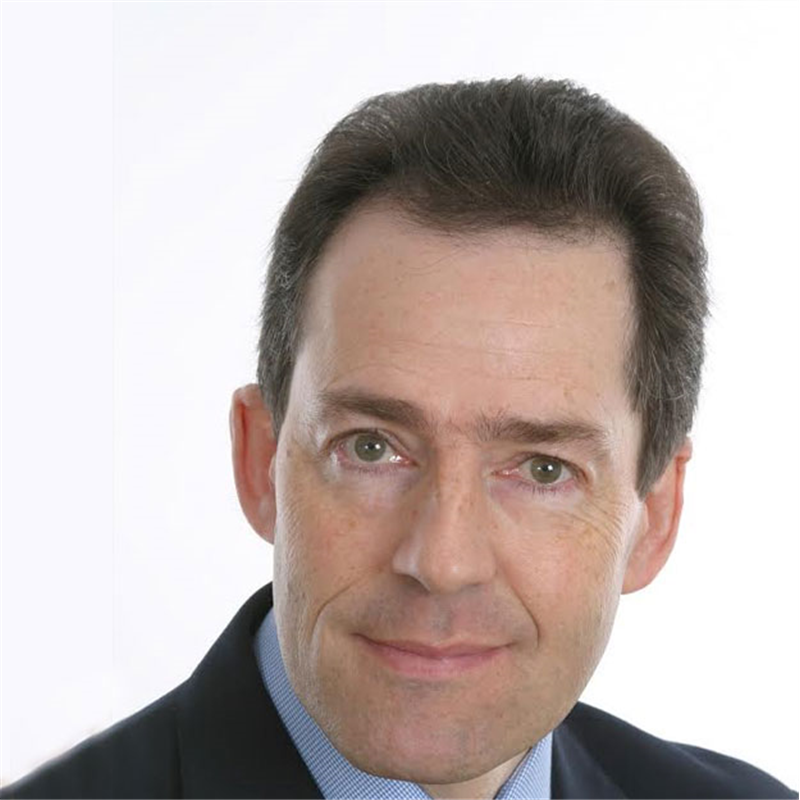 |
John was with Phillips Auctioneers for 23 years, latterly as International Director of Jewellery. An independent Jewellery Consultant since 1999, he now lectures, writes and broadcasts, being a regular expert on the BBC`s Antiques Roadshow. He was admitted to the Goldsmiths' Company in 2000 and is the author of Starting to collect Antique Jewellery. Also among his publications is co-authorship with Paul Attenbury of The Jewellery and Silver of H. G. Murphy, and this talk is subtitled `The Life and Works of Harry Murphy - Goldsmith, Silversmith and Unique Englishman`. Murphy’s greatest misfortune was to die just before the start of the Second World War. The designs and inspirations of the pre-war era were simply seen as passé and totally out of keeping with the new spirit of modernism which quickly grew after the Festival of Britain in 1951. Harry Murphy served his apprenticeship under Henry Wilson, probably Britain’s greatest designer goldsmith of the Arts and Crafts era. Here he learnt a wide range of skills and techniques including enamelling, gem-setting and polishing, niello, engraving and hammering. From 1928 until his death in 1939 he worked from retail premises in Marylebone, London, known as the Falcon Studio where he designed and created a prodigious amount of silverware for the corporate, civic and private sectors as well as some truly startling gold, silver and enamel jewellery inspired by nature, architecture, the Ballet Russes and the vibrancy of the Jazz Age. |
|
| Wednesday, 12 January 2022 |
| L. S. Lowry: A Visionary Artist |
| Michael Howard |
 |
Michael Howard, President of the Arts Society Bolton and Fellow of the Royal Society of Arts, is distinguished as a teacher, author and practising artist. He lectures at the Manchester School of Art, he has published widely on the art of the nineteenth and twentieth centuries, and he has exhibited at the Royal Academy and the New York Art Fair as well as having work represented in the Manchester Art Gallery. Michael has also worked often in broadcasting media, and he and his wife Ghislaine contributed to the film `Degas and the Dance` that won a prestigious Peabody Award. Among the books that Michael has published is `L. S. Lowry: A Visionary Artist`, and in this lecture he will take a fresh and detailed look at a painter whose very popularity can get in the way of a true appreciation of his extraordinary talent. |
|
| Wednesday, 10 November 2021 |
| The Journey of the Magi: Origins, Myth and Reality |
| Leslie Primo |
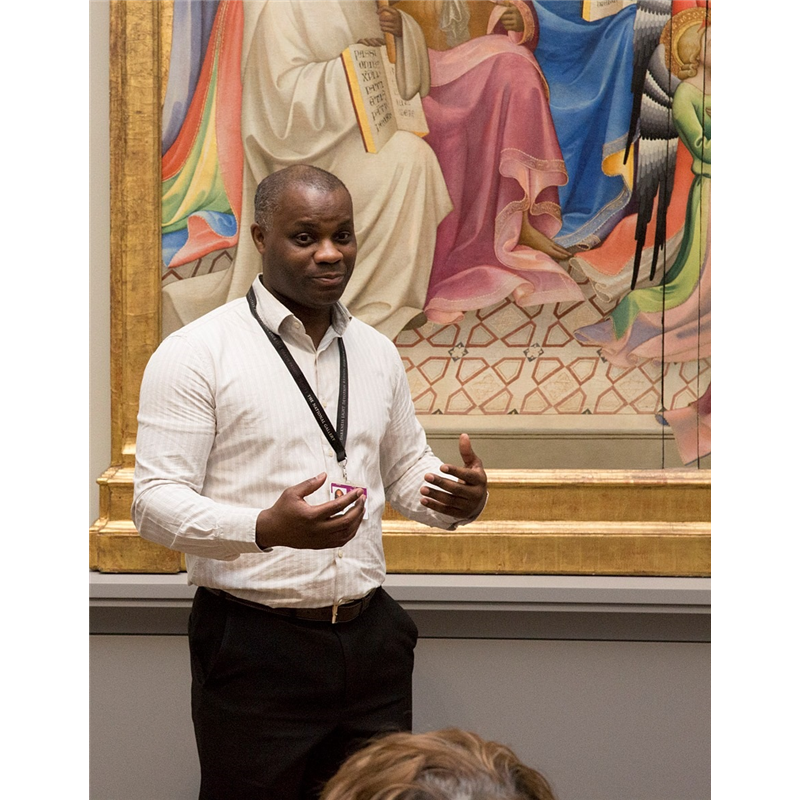 |
Leslie holds a BA in Art History and an MA in Renaissance Studies from Birkbeck College, University of London. He was visiting Lecturer in Art History at the University of Reading in 2005 and 2007, and gave lectures and guided tours, plus special talks, at both the National Gallery and the National Portrait Gallery for 18 years. Currently he lectures at the City Literary Institute, Imperial College, London, and has presented a series of talks at the National Maritime Museum and the Courtauld Institute. This lecture will look at the changing iconography behind the depictions of the story of the Adoration of the Magi and the various meanings behind these changes, not to mention the changes in the story of itself. Leslie will also consider the origin of the names of the Magi and the significance of their gifts to the Christ Child. Following this exploration of the fundamental roots of the story he will then come to the issue of the inclusion of the black king, where he came from, why he would be included, how significant was he and how European artists tackled the problem of depicting this magus when they themselves had little or no knowledge of such people of colour. |
|
| Wednesday, 13 October 2021 |
| A Woman Artist Looks At Women Painters |
| Ghislaine Howard |
 |
A painter of national reputation named as a Woman of The Year 2008 for her contribution to art and society, Ghislaine has published and exhibited widely, has had work in the Royal Collection and has had solo exhibitions at many prestigious venues including Manchester Art Gallery, Canterbury Cathedral and Imperial War Museum North. She is also an associate lecturer at Manchester Metropolitan University. This lecture asks if there is a distinctive quality to paintings made by women. Looking at works by both men and women of the same subject, painted at the same periods of history, we will have the opportunity to ponder on what it is to experience the world through a woman’s eyes. This is sure to surprise as so many fabulous women painters are still relatively little known today, Guaranteed to be of interest to the male members of the audience as well! |
|
| Wednesday, 08 September 2021 |
| Tantrums and Tiaras |
| Nigel Bates |
 |
Nigel Bates has been a performer for more than forty years in and out of the Royal Opera House Covent Garden, including seventeen years as Principal Percussionist with the Orchestra and eight years as the Music Administrator of The Royal Ballet, and he remains a regular contributor to the printed and online content of the ROH. He has worked with many of the leading figures in the classical music industry and was also a producer for both the BBC's Maestro at the Opera and Pappano's Classical Voices documentary series. In this lecture, which includes several performance video clips, Nigel will a look at backstage life at the Royal Opera House, Covent Garden and the pressures faced by performers, be they singer, dancer, conductor or musician. We see how the building copes with the demands of modern productions and examine audience expectations both inside the theatre and out. We also look at some of the highs and try to understand some of the lows that have been the fortune of this world-class performing venue over the years. |
|
| Wednesday, 14 July 2021 |
| Summer Special |
| TBA |
 |
Because of the ongoing uncertainty surrounding the coronavirus epidemic, the details of our Summer Special have yet to be finalised. We very much hope that this event, which is always a popular addition to our regular programme of lectures, will go ahead and prove as enjoyable as ever. More information will appear here as soon as it is available. |
|
| Wednesday, 09 June 2021 |
| Grayson Perry |
| Ian Swankie |
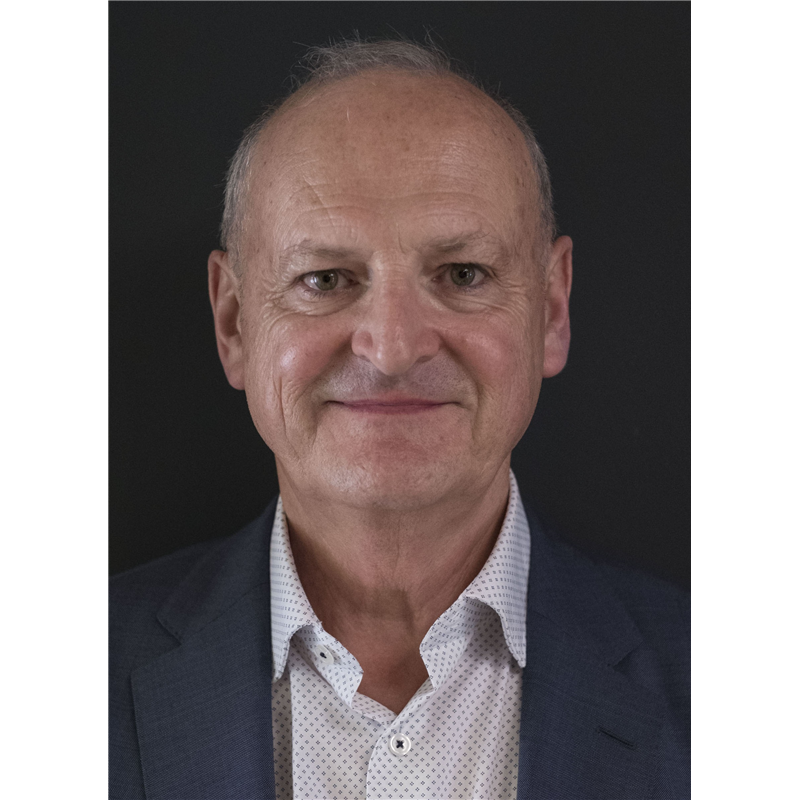 |
A Londoner with a passion for art and architecture, Ian is an official guide at Tate Modern, Tate Britain, Guildhall Art Gallery and St Paul’s Cathedral, and gives tours around each venue. He is also a qualified and active freelance London guide and leads regular tours for various corporations and organisations. Since 2012 he has led a popular weekly independent art lecture group in his home town of Richmond in West London. He is a Freeman of the Worshipful Company of Art Scholars, one of the City livery companies. Best known for his outlandish appearances dressed as his feminine alter ego, Claire, Grayson Perry is now a core part of the art establishment, a Turner Prize winner, Royal Academician, popular broadcaster and colourful character. He’s possibly one of the world’s best-known contemporary artists. His works of ceramics, textiles, tapestries and prints are highly sought after. Often controversial, he tackles difficult subjects in a poignant yet witty way and holds a mirror up to society. This talk will examine Grayson Perry’s work, his exciting and thought-provoking exhibitions, and the unique character inside the flamboyant frocks. |
|
| Wednesday, 12 May 2021 |
| Fiction, Fallacy and Fake News |
| Geri Parlby |
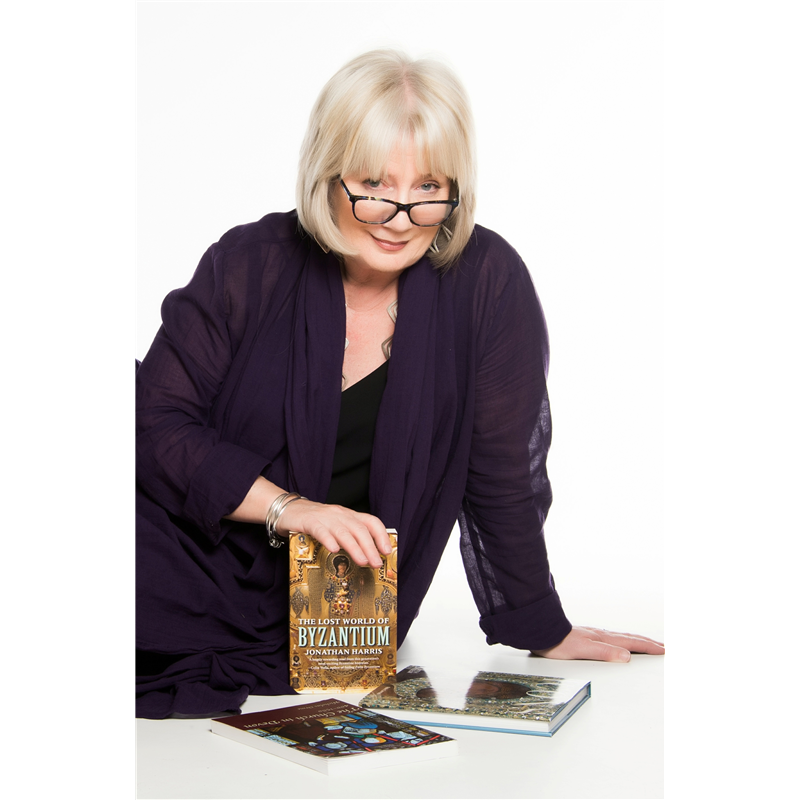 |
Geri is a former Fleet Street journalist and film PR. She has a first-class honours degree in History and Theology, a Masters in History of Art from the Courtauld Institute and a Theology doctorate from Roehampton University in London. She has been lecturing for the past 14 years both in the UK and internationally. She is also principal lecturer on The Arts Society South West Area’s History of Art course and is an Honorary Research Fellow at Roehampton University. The subtitle of this lecture is `Spin and Propaganda in Art Throughout the Ages`, and there`s nothing fake about that, since Geri promises to uncover examples of the paropagandist`s art in works ranging from ancient Mesopotamia to Nazi Germany. If you thought fake news was an invention of the 21st century, be prepared to think again: as Geri says, every picture tells a story - but whether the story is true or not is a different matter. |
|
| Wednesday, 14 April 2021 |
| Are You Looking At Me? |
| Stella Lyons |
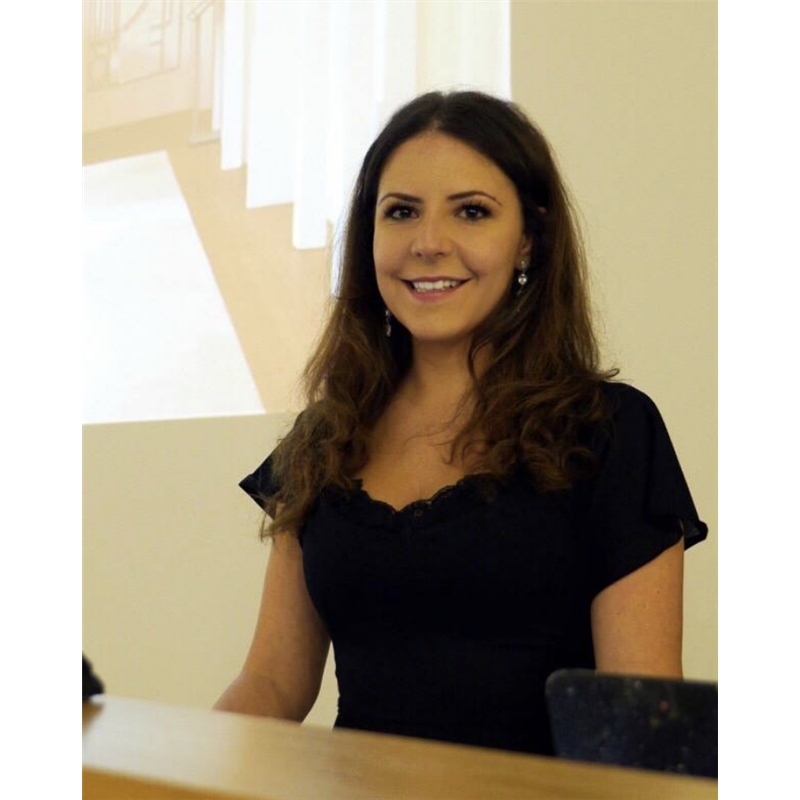 |
Syella Lyons followed a first class degree in the History of Art at Bristol University with a Master`s at Warwick, before further study in Florence and Venice. She now lectures throughout Europe and Australasia, has several publications to her name - an article on Norwegian art was featured on the front cover of the Arts Society magazine - and is a part-time lecturer at the University of South Wales. Stella will ask whether portraits are supposed to look like the sitter or are a way of probing something deeper. Portraits form part of the collection of almost every art gallery in the Western world. They are created for a myriad of reasons - money, power, propaganda, death, life and love. But what makes one ‘great’? From El Greco’s mysterious ‘Lady in a Fur Wrap’, to Vermeer’s iconic ‘Girl with the Pearl Earring’, to Norman Rockwell’s entertaining yet self-deprecating ‘Triple Self Portrait’, this talk will explore the secrets behind some of Art History’s most famous portrait paintings. |
|
| Wednesday, 10 March 2021 |
| Why Gardens Rank As Fine Art |
| Timothy Walker |
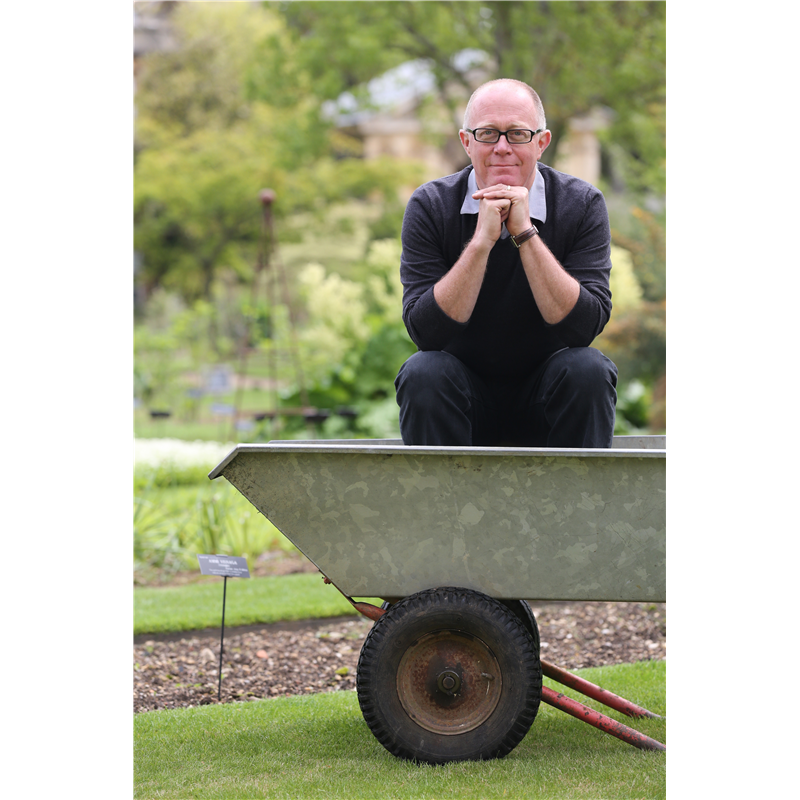 |
This lecture will be delivered via Zoom. Members will receive joining details by email. Since 1986 Timothy has given 1,500 public lectures. This was originally part of hus work as director of the Oxford University Botanic Garden from 1988 to 2014. Botanic gardens are often described as living museums, and garden curators lecture about them in the same way as museum curators talk about their collections. Since 2014 he has been a college lecturer and tutor at Somerville College Oxford. Gardens are often thought of a place where science and art meet on equal terms. His lectures investigate this relationship. |
|
| Wednesday, 10 February 2021 |
| `Debo` - Mitford, Cavendish, Devonshire Duchess, Housewife 1920-2014 |
| Simon Seligman |
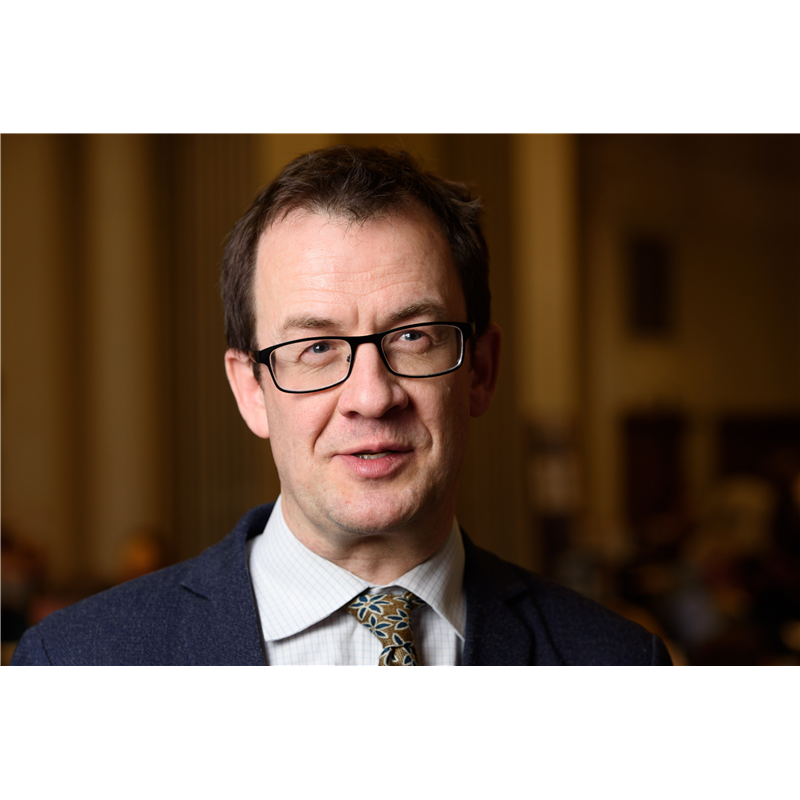 |
This lecture will be delivered on Zoom. Members will be sent joining details by email. Simon Seligman studied art and architectural history at Warwick University, including a semester in Venice, and is also a graduate of the Attingham Summer school. From 1991 until 2010 he worked at Chatsworth in a variety of roles, latterly as Head of Communications, and he has lectured about Chatsworth, the Devonshire Collection and associated topics, throughout the UK and on several US tours. He also gave numerous public presentations and interviews with the late Deborah, Dowager Duchess of Devonshire. "Deborah Devonshire, the youngest of the Mitford sisters and wife of the 11th Duke of Devonshire, was hefted by marriage to one of Europe’s greatest treasure houses, Chatsworth. In the second half of the 20th century, in partnership with her husband, she imbued it with a spirit, elegance and sense of welcome that transformed it from being the worn-out survivor of decades of taxation, war and social change into one of the best-loved, most-emulated and popular historic houses, gardens and estates in the country. With responsibility for Lismore Castle and Bolton Abbey as well, no wonder her passport stated her profession as ‘housewife’. Along the way, she became a best-selling author and sell-out speaker, champion of the countryside, its skills, traditions, livelihoods and food, trustee and patron of numerous charities, businesses and good causes, and the most famous poultry keeper in the country. She met Hitler and Churchill, was a trusted confidant of the Prince of Wales, played her part as the steady heart of the Mitford sisters’ melodrama and was friends with a dazzling array of some of the brightest and most fascinating of her contemporaries, including President Kennedy, Evelyn Waugh, Oscar de la Renta, John Betjeman, Lucian Freud, Tom Stoppard, Neil MacGregor, Patrick Leigh Fermor and Alan Bennett. She said herself that charm was the hardest quality to describe in another person; hers lived in her unique turn of phrase, her stoic Mitfordian perspective on life’s challenges, her curiosity about everyone she met, her stylish beauty, quick wit and delight in all that life offered her. Debo had a lasting impact not just on Chatsworth but on everything she touched and everyone she met; I was lucky enough to work for and with her over more than 20 years and in this lecture I pay tribute to an astonishing life." - Simon Seligman |
|
| Wednesday, 13 January 2021 |
| Powder and Poison: Cosmetics, Beauty and the Art of Portraiture |
| Claire Walsh |
 |
This lecture will be delivered on Zoom. Members will be sent joining details by email. Claire Walsh gained her PhD at the European University Institute in Florence. Having previously worked at the Victoria & Albert Museum and lectured there and for the University of Warwick, she now lectures for the Open University. She has also lectured widely in Britain, at the Courtauld Institute of Art and Museum of London amongst others, and to specialist groups including the Art Fund, the Ceramics Society, the Costume Society and the Ancient Monuments Society. She has numerous publications to her In her lecture, Claire asks why people look the way they do in portraits of the past. From the alarmingly lead-whitened cheeks of the Renaissance, to the disappearing hairlines and mouse-hair eyebrows of the 17th and 18th centuries and rouged-cheeks of the Victorians, portraits have been governed by cosmetics, fashions and ever-changing concepts of beauty. Not only women, but men too were at the mercy of changing trends in hair styles, wigs, jewellery, smallpox patches and artificial teeth. From the application of rhubarb or boiled pigeon, mercury or lead, powders and poisons have dominated the ‘look of an age’. And while the portraitist strove to capture the individual, this had to be translated through the mask of stylish convention, balancing reality with the ‘ideal of beauty.’ |
|
| Wednesday, 11 November 2020 |
| The Very Model of English Entertainment: The Works of W. S. Gilbert and Arthur Sullivan |
| Roger Askew |
 |
This lecture will be delivered via Zoom. Roger Askew was a chorister at Wells Cathedral School and a choral scholar at Magdalen College, Oxford, where he graduated with an honours degree in English. He combined a teaching career with professional singing in London, and after obtaining a further degree in Music became Director of Music at Daniel Stewart’s and Melville College in Edinburgh. After retiring in 2003 he returned to the south of England. He is President Emeritus of The Stoke Poges Society and Chairman of Windsor and Maidenhead Decorative and Fine Arts Society. This lecture will examine how the peculiar geniuses of these two very different men, William Schwenck Gilbert and Arthur Sullivan, came together under the guiding hand of the impresario, Richard D’Oyly Carte, to create one of the most individual and enduring forms of theatrical entertainment. The Savoy operas, with their gentle satire, celebrate the quirks and foibles of the British nation, and are as alive today as in the 1880s. The lecture is fully illustrated with musical examples - and who knows, we may find ourselves singing along to the well known melodies! |
|
| Wednesday, 14 October 2020 |
| Undressing Antiques |
| Mark Hill |
 |
Mark studied History of Art & Architecture (BA Hons), and began his career as a porter and Junior Cataloguer at Bonhams, before moving to Sotheby's where he was a Specialist in the Collectors' Department. He became director of an internet company forming and running a ground-breaking He has been a Miscellaneous expert on the Antiques Roadshow since 2007, and has co-presented three primetime factual TV series on antiques and collecting for BBC2. “Antiques. I don’t understand them and they’re beyond my budget. They’re not for me.” A persuasive introduction to buying antiques and integrating and using them in today’s homes. The state of the antiques market and the different meanings of the word value are considered, and we take a look at what current and future generations of collectors are buying, why they are buying it and how they are displaying it. |
|
| Wednesday, 09 September 2020 |
| Gilt and Gorgeousness: A Celebration of the 200th Anniversary of King George IV`s Accession to the Throne |
| Barbara Askew |
 |
THIS LECTURE WILL TAKE PLACE ON ZOOM. Barbara Askew graduated with an honours degree in History, which she then taught for several years before qualifying as a London Blue Badge Guide. As well as being a lecturer for the Arts Society, Barbara is an Examiner and Course Director on Blue Badge Guide Training Courses and an acknowledged expert on Royalty and Windsor Castle - not surprising, as she grew up in Eton with Windsor Castle in view every day. Gilt and Gorgeousness examines the style of royalty adopted by George IV. On coming to the throne he instinctively understood the majesty and splendour appropriate to the monarch of the richest and most powerful country in the world. This lecture traces his developing taste as Prince of Wales, Regent and King and examines connections between his royal residences as well as his spectacular legacy to the Royal Collection – the greatest by any monarch since Charles I. |
|
| Wednesday, 10 June 2020 |
| Three Great Families and their Gardens: A History of the Astors, the Rothschilds and the Sackville-Wests |
| Caroline Rayman |
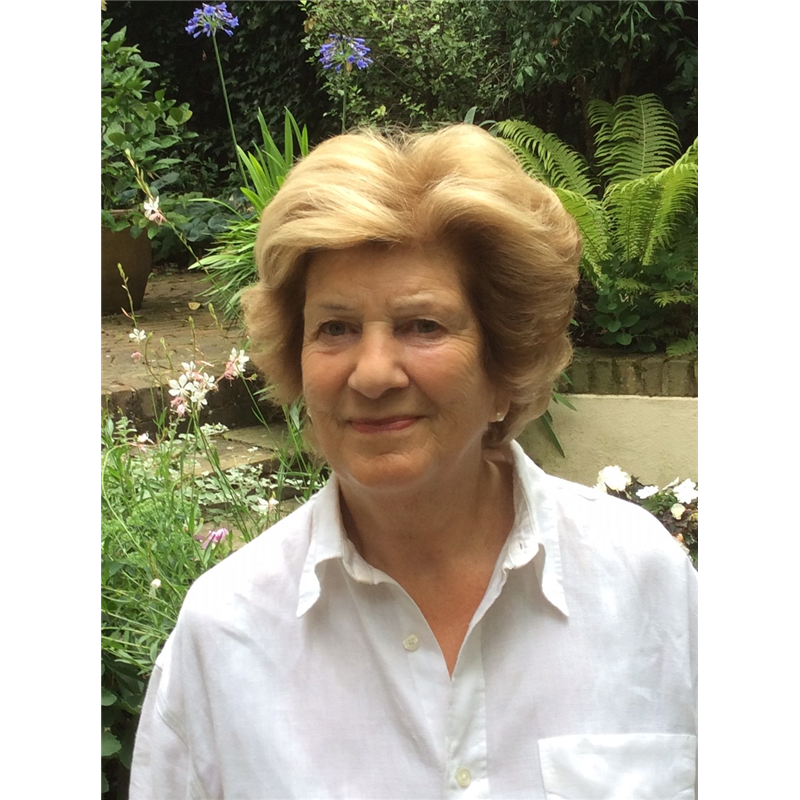 |
Caroline Rayman has lectured for many years to universities and art organisations in America and on cruise boats. She was an official guide at the British Museum and has published articles on samplers. Three Great Families and their Gardens is the story of three very different, but hugely successful families, the Sackville Wests, the Astors and the Rothschilds. The Sackville Wests have been part of the establishment since the time of William Conqueror and the other two families are wealthy immigrants who came to England in the 19th century. The talk traces the history of the families, discusses their contribution to life in England and celebrates the splendid gardens that they have created. It is sure to be a visual delight, and may even inspire society members with ideas for their own more humble gardens! |
|
| Wednesday, 13 May 2020 |
| Tantrums and Tiaras |
| Nigel Bates |
 |
Nigel Bates is the Music Administrator of The Royal Ballet and has been a performer for nearly forty years in and out of the Royal Opera House, including seventeen years as Principal Percussionist with the Orchestra. He has worked with many of the leading figures in the classical music industry and was also a producer for both the BBC's Maestro at the Opera and Pappano's Classical Voices documentary series. He is a regular contributor to the printed and online content of the ROH. Nigel`s lecture Tantrums and Tiaras takes a look at life backstage at London's Royal Opera House and the tribulations and triumphs of working with The Royal Opera and The Royal Ballet companies. He will explain the way artistic inspirations, the people involved and the very special Victorian building all function together to create world-class opera and ballet in a unique environment. The talk Includes several performance video clips, and promises to be not so much a peek as a good, long look behind the scenes of one of the world`s great artistic venues. |
|
| Wednesday, 08 April 2020 |
| The Art of Dance |
| Jennifer Toynbee-Holmes |
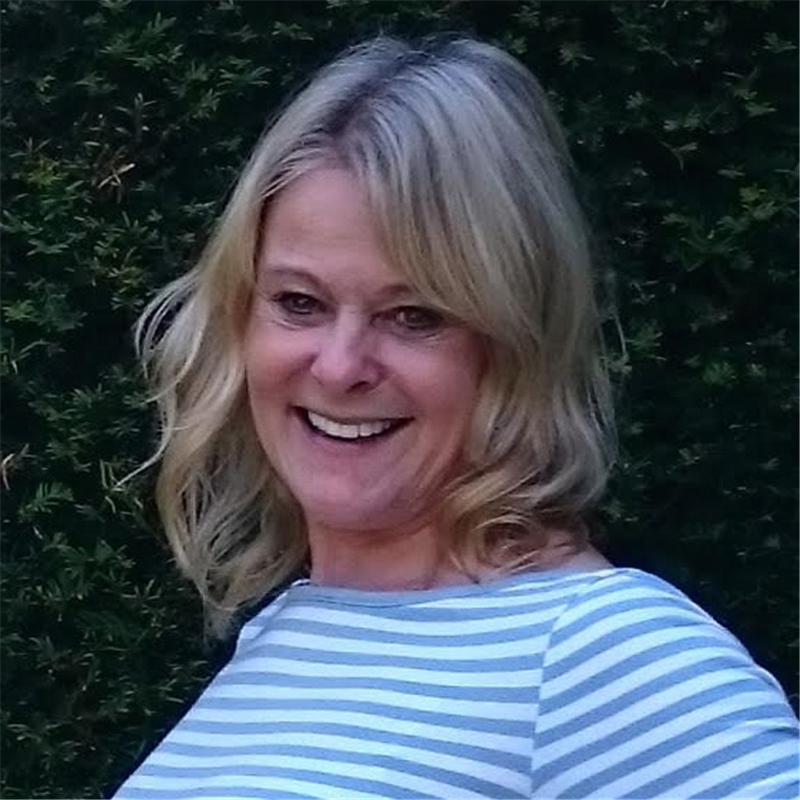 |
Jennifer Toynbee-Holmes is an experienced guide at Tate Britain and Tate Modern and lectures at various art societies and institutions. She has a special interest in British and European art of the late 18th, 19th and early 20th century. Having gained an MA in film and television practice, Jennifer had a long-standing career spanning twenty years as a television producer/director making documentaries and factual programmes for the BBC, ITV and Channel 4. She was also a visiting lecturer at Goldsmiths College and Birkbeck, University of London and a senior lecturer at Southampton Solent University in the Faculty of Media, Arts and Society. Of her talk on The Art of Dance, Jennifer writes: "Since the birth of the earliest human civilisations, dance has been an important part of ceremony, rituals, celebrations, a method of healing and a means of expression and entertainment. Using stills and video clips we take a look at dance as an art form from its earliest beginnings; through the birth and rapid development of ballet throughout Europe, the explosion of modern dance in the early 20th century a time of unprecedented creative growth for dancers and choreographers and with the growth of post-modernism from the 1960s the expansion of street dance, hip-hop, break dancing and rock dance." |
|
| Wednesday, 11 March 2020 |
| How to Pick a Favourite Church |
| Janet Gough |
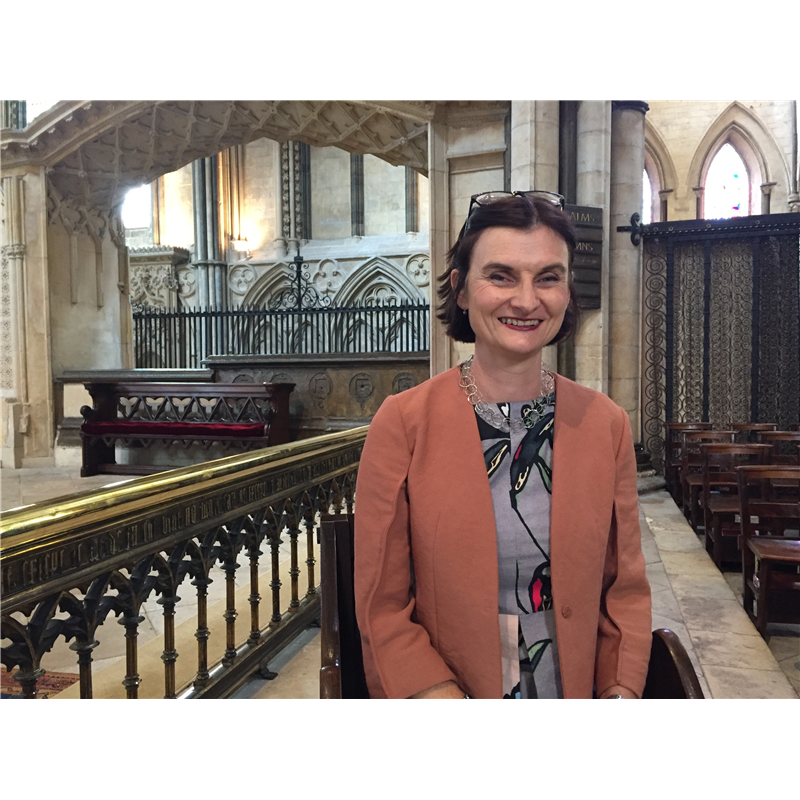 |
There can be few people who know more about church architecture than Janet Gough. For eight years the Church of England’s Director of Church Buildings and Secretary of the Church Buildings Council and Cathedrals Fabric Commission, Janet has written two illustrated paperbacks to encourage greater enjoyment of these amazing buildings, Director's Choice, Churches of the Church of England and Director's Choice, Cathedrals of the Church of England and produced and presented a TV series on cathedrals for PBS. In January 2017 she received an OBE for services to heritage. In her work for the Church of England, Janet chose one church from every C of E diocese to illustrate the incredible story of our churches bound up with the story of England over the last 1400 years. In her lecture she shares with the audience how they might select their own favourites, together with the many joys and some of the challenges in maintaining England's extraordinary ecclesiastical heritage. |
|
| Wednesday, 12 February 2020 |
| Piero della Francesca |
| Hugh Hollinghurst |
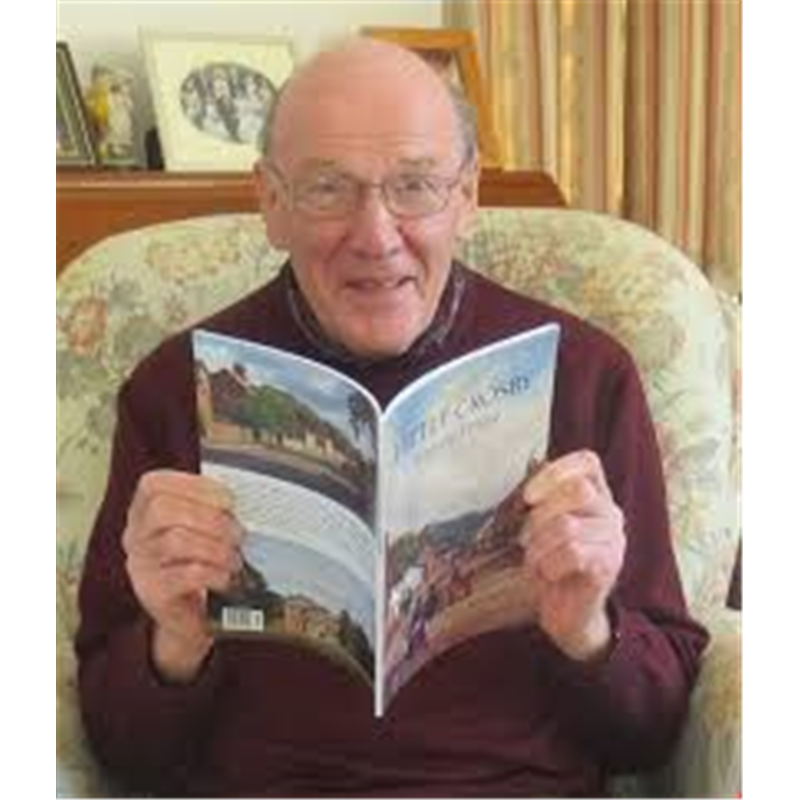 |
Himself a member of our society, as well as former secratary of St. Michael`s Parochial Church Council, Hugh Hollinghurst will be well known to most if not all of his audience. A Cambridge Clsasics graduate, Hugh was Deputy Head of Chesterfield High School for seventeen years until 1998, and even in `retirement` he continued to teach Classics there and at both the Merchant Taylors` senior schools. He has published nineteen books, mostly on local history, as befits the chairman of the Crosby and District Historical Society. Hugh is something of a Renaissance man, with areas of expertise ranging from the ancient world to the Liverpool Overhead Railway. It is therefore appropriate that his lecture is on one of the Renaissance`s finest artists, Piero della Francesca. As well as painting, Piero also wrote technical works on mathematics and geometry, which perhaps explains the perfection of form and perspective that characterises his art. |
|
| Wednesday, 08 January 2020 |
| The Architecture of the British Raj |
| Anthony Peers |
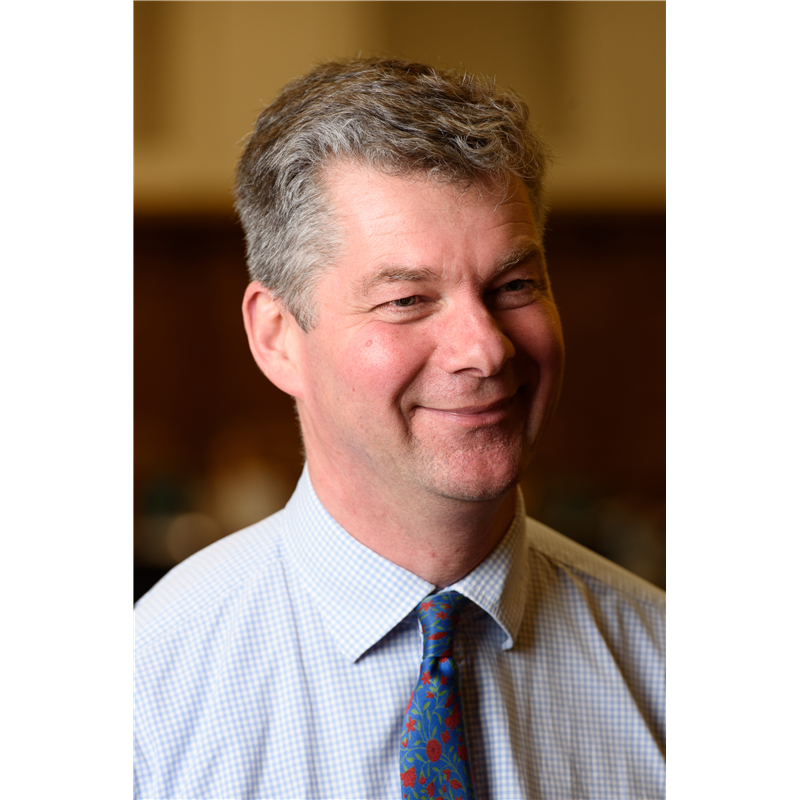 |
Anthony Peers is a freelance historic buildings' consultant, educated as an Architectural Historian at Manchester University and trained in building conservation at the Institute of Advanced Architectural Studies, York. After two years with SAVE Britain's Heritage, he worked with the English Heritage Listing Division on the review of military buildings. In the mid 1990s was employed by the Department of Trade and Industry in Bombay, setting up and running an innovative project to repair George Gilbert Scott's university buildings and training local architects and craftsmen in conservation techniques and philosophy. Anthony is a Fellow of the Society of Antiquaries and Deputy Chairman of the Ancient Monuments Society. His knowledge of so many aspects of the built environment, alongside his first hand experience of India, will make his talk on the Architecture of the British Raj a truly memorable event. This lecture starts with an examination of evolving attitudes towards the British Empire, and towards the buildings which survive as testament to its achievements. A whistle stop tour is then made of the very best colonial buildings in Chennai (Madras), Kolkata (Calcutta), Mumbai (Bombay), Delhi and elsewhere. In the final third of the lecture the focus is on Bombay, reflecting on Anthony`s experience of having masterminded a project to restore that city’s magnificent George Gilbert Scott designed university buildings. Bombay’s economic boom of the 1860s coincided with the high point of the Gothic Revival, and nowhere else in the world can claim to have as magnificent an assemblage of Gothic Revival buildings. |
|
| Wednesday, 13 November 2019 |
| Buildings of Delight |
| Roger Mitchell |
 |
Roger Mitchell studied History at Oxford and Fine Art at Leeds and was awarded a Churchill Fellowship to travel and study in USA. A former College Vice-Principal who now lectures for the University of Liverpool and for Adult Residential Colleges, he also organises and leads country house study tours, and tries to find time to do research on British and American Country Houses. The `Buildings of Delight` that appear in this lecture are small and personal, and a touch of quirkiness and individuality is also evident. Covering a chronological range from the 16th to the 20th century and a geographical range across Great Britain and even across the Atlantic, there is plenty of scope. Gatehouses and bridges, temples and grottoes, factories and factory chimneys, cottages and almshouses, water towers and ice houses all have a place. At the centre of the lecture is the 18th century landscape garden – one of England’s greatest and most original contributions to mankind’s artistic achievement. This lecture will be preceded by the society`s annual lunch at 1.30 p.m. |
|
| Wednesday, 09 October 2019 |
| Love and Sentiment in Victorian Jewellery |
| Susan Rumfitt |
 |
Susan Rumfitt studied for her postgraduate degree in decorative arts at Glasgow University, in association with Christie’s Auctioneers. Following a jewellery and silver traineeship with Christie’s, she moved to Phillips in Edinburgh as Head of the Jewellery and Silver Department. In 1998, she moved to London as an international jewellery specialist where she established and ran a second jewellery department for Phillips Auctioneers. Susan is now an independent jewellery specialist based at her gallery in Harrogate, advising private individuals as well as auction houses. She regularly lectures on the history of jewellery and holds jewellery courses and selling exhibitions throughout the UK. As a member of the team of experts on BBC`s Antiques Roadshow, Susan once came across a bracelet originally belonging to Queen Victoria, and it is the jewellery of the Victorian age that she will survey in her lecture. |
|
| Wednesday, 11 September 2019 |
| William Hogarth |
| Angela Smith |
 |
Dr Angela Smith graduated from Leicester University with a First in Art History and subsequently completed a PhD at the Warburg Institute in London. Since then, she has taught at Leicester University and Bishop Grosseteste University in Lincoln, and carried out research for the National Inventory of Continental European Paintings. She now runs her own publishing company, lectures widely in the UK and abroad and has several publications to her name. William Hogarth is one of the great names in English eighteenth century art. Over the course of his career he produced numerous engravings and paintings and not infrequently his work was satirical. Two well known series by him are The Rake`s Progress and Marriage à la Mode. In this lecture we survey Hogarth’s career and focus on some of those works in which he satirised those he saw around him. |
|
| Wednesday, 12 June 2019 |
| English Furniture in the 18th Century |
| Deborah Lambert |
 |
Deborah Lambert read for an MA in the History of Art at the Courtauld Institute, London University. In 1978 she joined Christie’s Education, part of Christie’s Auctioneers, as tutor, lecturer and academic director teaching fine and decorative art history. From 2006 until stepping down in September 2015, Deborah was Curator of the Schroder Collection, an important private art collection, and she now concentrates on her freelance lecturing and research, and for over 20 years appeared on BBC Television’s Antiques Roadshow as a furniture specialist. Deborah`s lecture focuses on what she calls `The Golden Age` of English furniture, which in the 18th century found its own identity. While continuing to be open to the influence of Continental design, English craftsmen and designers now for the first time began to have a significant affect on furniture making throughout Europe. From the beginning of the century there was a new emphasis on the decorative quality of timber, and designers created forms that are instantly recognizable as ‘English’. These new designs were circulated rapidly through the publication of ‘catalogues’ by some of the great names of the century, such as Chippendale, Hepplewhite and Sheraton. This lecture will explore the development of style, design and materials to try and throw light on what is it that makes English furniture of this golden age so highly distinctive and recognizable? |
|
| Wednesday, 08 May 2019 |
| Picture Postcards 1909 to 1939 |
| James Taylor |
 |
James Taylor studied at the Universities of St Andrews and Manchester, and is a former curator of paintings, drawings and prints, and co-ordinator of various exhibitions and galleries, at the National Maritime Museum, Greenwich. This represents one link with Merseyside, since Liverpool is home to a fine Maritime Museum of its own. Another connection is that James curated `Dazzle: Disguise and Disruption in War and Art`at St Barbe Museum & Art Gallery in Lymington, which reminds us of the Dazzle Ferry created as part of the First World War commemorations. Unsurprisingly, James` talk to the society will have a maritime flavour, though more perhaps to do with the seaside than the sea itself. `Picture Postards` promises to open our eyes to an art form we all know something about from first hand experience, but to help us see a lot more than we ever thought was there. From the Edwardian era to the outbreak of World War II millions of artist-drawn humorous postcards were produced not just for entertainment but to bolster morale, to inspire, instruct, motivate and persuade. Discover the popular themes and styles of the period by the masters of the medium such as Mabel Lucie Attwell, Dudley Buxton, Donald McGill and Fred Spurgin, and the reasons why their popularity waned with the British public. |
|
| Wednesday, 10 April 2019 |
| Austen`s Arcadia |
| Jane Tapley |
 |
Jane Tapley first moved to Bath to study Home Economics, and is currently Special Events Organiser at the city`s Theatre Royal. There can be no better base for someone with her interest in and knowledge of Jane Austen, which she has developed in relation to both food and theatre. She has acted as food consultant to various TV productions of Austen`s novels, and in the course of her work for the theatre she has produced programme notes on one of her best loved books, Emma. In this lecture, one Jane (Tapley) invites her audience to join her in an exploratory journey to find out who the other Jane (Austen) was and how she discovered and achieved her remarkable talent. It is a journey to one of the greatest literary periods in history when the novel - as its name suggests - was a new way of writing. The author was a quiet, unassuming vicar`s daughter, struggling to create her own independence. She achieved this only in moderation during her lifetime, and it wasn`t until after her death that her work became fully published and appreciated by a worldwide audience. |
|
| Wednesday, 13 March 2019 |
| Icons of the Eastern Church |
| Chris Newlands |
 |
The Revd Canon Chris Newlands was born in West Yorkshire. After studying Drama and French at Bristol University he spent two years in Algeria, teaching English and encouraging an interest in theatre, music and the arts on behalf of the British Council. He returned to England to study Theology at Cambridge, before being ordained as an Anglican priest. Chris was the Anglican Envoy to the Orthodox Churches of Eastern Europe in the early 1990s. This lecture, whose full title is "Icons of the Eastern Church and How to Read Them", draws on his experience to explain the history of the art of the Orthodox Church, and to show how to read the rich symbolism of these images of great beauty and spiritual significance. For several years now he has lectured on this and other topics on cruise ships, and he promises to fill his talk with `facts, anecdotes and humour`. |
|
| Wednesday, 13 February 2019 |
| Face Games |
| Sophie Oosterwijk |
 |
Dr Sophie Oosterwijk was born in Gouda and studied English at Leiden and Medieval Studies at York before obtaining two doctorates in Art History (Leicester) and English Literature (Leiden). She is a recognised specialist in Early Netherlandish, Flemish and Dutch art and previously taught Art History at the Universities of Leicester, Manchester and St Andrews before returning to the Netherlands to take up a research post at Utrecht University. Sophie has spoken before to our society, and we are delighted that she is returning this year. Her talk is subtitled `The History and Mystery of Cryptoportraits in European Art`. A portrait can be much more than a straightforward likeness of a person. A ‘cryptoportrait’ may at first sight not look like a portrait at all, because it can be ‘disguised’ as an Adoration of the Magi with real people playing the parts of the Magi, or as a statue of a prophet or saint with the features of a patron; or the artist’s self-portrait may be hidden amongst a host of other faces. Throughout western art we may discover such concealed portraits if we look carefully and are prepared to recognise these games that artists and patrons chose to play with the beholder. |
|
| Wednesday, 09 January 2019 |
| As Good As Gold |
| Alexandra Epps |
 |
Experience the story of gold and its significance and symbolism within the history of art – as the colour of the sun; the colour of divinity; the colour of status and the colour of love. From creations ancient and contemporary, sacred and profane – all that glitters is certainly gold… Alexandra Epps is an Official Guide and Lecturer at Tate Modern, Tate Britain and Guildhall Art Galleries, a Pallant House Gallery Lecturer and a City Lit Institute Art History Tutor. She is a Qualified Guide to the City of London, offering lectures and walks about many aspects of the arts for societies, corporations and private individuals. She is a member of the City of London Guide Lecturers Association and co-author of the book Lord Mayor’s Portraits 1983-2014 (2015). Alexandra’s background is in design having practised as a graphic designer running her own design consultancy for many years. She has a BA from Saint Martins School of Art and an MA from the London College of Printing. |
|
| Wednesday, 14 November 2018 |
| Christmas Customs And Traditions |
| Richard Box |
 |
Origins, stories, legends, truths and untruths about what we do at Christmas time.
This lecture takes the form of a rhetorical quiz. It is a light hearted presentation of many serious, but also, amusing, beliefs, subject and activities, concerning this ‘ yule-tide ‘ season. Both questions and answers will be supplied by the lecturer in both serious, educational and informative terms as well as playful, jovial and merrily that befits this joyful season of the year MR RICHARD BOX Freelance artist (drawing, painting and embroidery), lecturer, teacher and author since 1985. Previously Head of Art at Avery Hill College of Education. He has taught in schools from nursery to secondary. He presently teaches and lectures to adults at Education Centres and to independent organisations. He exhibits his work regularly at various galleries throughout the country. |
|
| Wednesday, 10 October 2018 |
| Collecting The Grand Tour |
| Marc Allum |
 |
Marc Allum discusses the influence of antiquity on collectors, fashion and the foundation of our major museums, illustrated with an enlightening trip through the world of collecting Grand Tour souvenirs. Marc Allum is a freelance art and antiques journalist, writer and broadcaster based in Wiltshire. He is shortly to begin his 20th year as a specialist on the BBC Antiques Roadshowand has appeared on numerous television and radio programmes. Marc regularly writes for mainstream magazines and is an author, antiques consultant and lecturer. He also runs a fine art valuation and consultancy service. Marc has his own unique style with interests ranging from pre-history to modern design and is a self-confessed collectaholic. He has a passion and reputation for divining the unusual through ‘a desire to connect with history through the interpretation and pursuit of objects and their origins’. Marc has lectured widely for many years to a number of different organisations in both the public and charity sectors, including travel companies, The National Trust, the WI and many literary festivals including Cheltenham, Bath, Wells and Petworth. |
|